

 |

Ithaca NY (SPX) Aug 02, 2010 In the four centuries since Galileo pointed his handheld cardboard-and-glass telescope skyward and Johannes Kepler described two laws of planetary motion, humans have come to know our solar system almost as intimately as we know our hometowns. So, consider the challenge in reviewing all of planetary science since 1610 ... in 4,000 words or fewer. Joseph A. Burns, professor of astronomy and the Irving Porter Church Professor of Engineering, was offered that original task by the journal Nature - and took it. (Nature editors ultimately allowed an additional 3,500 words.) His nine-page (plus another page of footnotes) whirlwind tour appears in the July 29 issue. Burns begins in 1609, the year of Galileo and Kepler (although Galileo actually made most of his paradigm-shifting observations in 1610), and moves through the 17th century, when various solar system bodies were identified and classified. In those times, he notes, astronomy was primarily a practical tool for maritime navigation. The 17th and 18th centuries brought Halley and Herschel, the characterization of comets, and the discovery of Uranus. Then came the discovery of the asteroid Ceres, the first sensing of infrared and ultraviolet radiation, and the detection of stellar parallax (the apparent shift in the position of a star viewed from Earth at different points in orbit). The majority of Burns' retelling focuses on the last 50 years - when, initially spurred largely by politics and nationalism, humans became active explorers in space. "Few citizens today realize how poorly known the solar system's members, including the Earth, were before the space era," he writes. "Simply put, astonishingly few facts were available." As recently as 1966, for example, scientists actively debated whether there was vegetation on Mars. When Burns entered the field in the late 1960s, the space age was in full swing. "I became addicted to space exploration by the gradual and seductive disrobing of all the inner planets," he writes. From the Mariner missions to Mercury, Venus and Mars to the Viking landers on Mars and the Voyager Grand Tour, "it truly was an incredible time," he said. Politics have changed and the pace has slowed since then, he writes, but new discoveries keep coming. "The way that you can have a whole array of bodies formed around our sun out of the same sorts of materials - physics and chemisty are the same everywhere, and you get planets and satellites that look so remarkably different and are so astonishingly beautiful - I'm continually amazed," he said. "Exploring the solar system is much like it must have been for the adventurers who came to the New World centuries ago, or when you go traveling - you turn around a corner and you never know what you're going to see or what you're going to learn. And that's the way it's been." Looking to the future, Burns predicts a deepening understanding of the solar system's origins, a more detailed familiarity with its components, and missions that are more collaborative and democratic - but perhaps not as revolutionary. And the first manned mission to Mars, he adds, might be many decades or even centuries away. "Some policymakers consider that the early 21st century is the time to develop outposts on Mars, but such action seems premature for various reasons - financial, technical and sociological," he writes. But if Martian outposts are not feasible quite yet, he said, the coming years are likely to bring a deeper understanding of the origin and evolution of the solar system, our place in it, and the worlds beyond it. "I think really the future is in finding other Earthlike planets around other stars and perhaps life there," he said. "And just the way that our understanding of our immediate surroundings has changed, that will change our perspective on life and our species."
Share This Article With Planet Earth
Related Links Cornell Astronomy News from Skynightly.com

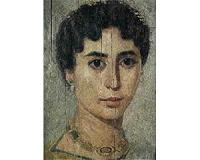 Hypatia - 4th Century Woman Astronomer
Washington DC (SPX) Jul 29, 2010 The new movie Agora chronicles the life, challenges and death of Hypatia, a 4th Century woman astronomer whose contribution influenced and shaped modern science and our understanding of the world and the universe. Mabel Armstrong, author of the award-winning book Women Astronomers: Reaching for the Stars, tells Hypatia's story with the joy that a great science teacher (which she was) can bring t ... read more |
|
|
| The content herein, unless otherwise known to be public domain, are Copyright 1995-2010 - SpaceDaily. AFP and UPI Wire Stories are copyright Agence France-Presse and United Press International. ESA Portal Reports are copyright European Space Agency. All NASA sourced material is public domain. Additional copyrights may apply in whole or part to other bona fide parties. Advertising does not imply endorsement,agreement or approval of any opinions, statements or information provided by SpaceDaily on any Web page published or hosted by SpaceDaily. Privacy Statement |


 del.icio.us
 Digg
Digg Reddit
 YahooMyWeb
 Google
 Facebook


