

 |

Phoenix AZ (SPX) Sep 14, 2010 Arizona's largest electric utility is testing new smart grid technologies in Flagstaff that could significantly reduce customer power outages and exponentially speed outage restoration times. APS is piloting self-healing technologies on two main distribution lines in Flagstaff. Sensor devices are mounted on power lines and have the ability to communicate with one another and with central computer systems. When a disruption occurs, the devices quickly narrow down the location, isolate it to the affected area and restore power everywhere else on the line. In the simplest of cases, the sensors may also self-heal a fault. That is, they can determine a breaker is open on a line then automatically re-close it or re-route power so customers never experience a power outage. "Self-isolating and self-healing technologies have the promise of significantly improving reliability," said APS Director of Smart Grid Development Barbara Lockwood. "These devices could cut down on the number of people affected by outages and the time it takes for APS to respond and make repairs. When perfected and widely deployed, this technology could be a game changer." Today, for example, when a car hits a power pole, the entire line is affected and an entire neighborhood of customers might lose power. Often, APS must rely on customers to phone in the outage. With the new technologies, the sensoring devices communicate with one another and isolate the fault. Only those customers closest to the accident would be without power. Instead of 2,000 customers without power, for instance, only 100-200 might be affected. When outages occur, APS knows which equipment or power line to inspect but not necessarily the exact point that is affected. APS dispatches service crews to patrol the line. Through process of elimination, they identify the problem and work to restore power. With the self-isolating technologies, the sensors tell APS dispatchers exactly where the fault took place. Crews then go right to that spot to make repairs, which could cut response times considerably. The self-healing grid pilot is the latest in a long-standing effort by APS to maintain its position as one of the country's most reliable electric utilities. Last year, APS customers experienced an average of less than one outage per customer, compared to a 2008 industry median of 1.27 outages per customer. The company also excels in other key customer reliability measures such as low outage frequency and short average outage duration. The self-healing technology pilot is part of APS's smart grid initiatives in Flagstaff, which include the Community Power Project, an innovative residential solar power program that will test the effects of a high concentration of solar energy on a single distribution line. Separately, in 2009, APS also installed 36,000 advanced electric meters, which enable two-way digital communication and expand the ways customers can save energy and money. APS, Arizona's largest and longest-serving electric utility, serves more than 1.1 million customers throughout the state. With headquarters in Phoenix, APS is the principal subsidiary of Pinnacle West Capital Corp. (NYSE: PNW).
Share This Article With Planet Earth
Related Links APS Powering The World in the 21st Century at Energy-Daily.com

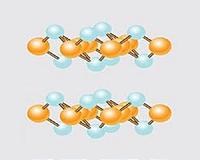 Many Roads Lead To Superconductivity
Berlin, Germany (SPX) Sep 13, 2010 Since their discovery in 2008, a new class of superconductors has precipitated a flood of research the world over. Unlike the previously familiar copper ceramics (cuprates), the basic structure of this new class consists of iron compounds. Because the structure of these compounds differs from the cuprates in many fundamental ways, there is hope of gaining new insights into how the phenomenon of ... read more |
|
|
| The content herein, unless otherwise known to be public domain, are Copyright 1995-2010 - SpaceDaily. AFP and UPI Wire Stories are copyright Agence France-Presse and United Press International. ESA Portal Reports are copyright European Space Agency. All NASA sourced material is public domain. Additional copyrights may apply in whole or part to other bona fide parties. Advertising does not imply endorsement,agreement or approval of any opinions, statements or information provided by SpaceDaily on any Web page published or hosted by SpaceDaily. Privacy Statement |


 del.icio.us
 Digg
Digg Reddit
 YahooMyWeb
 Google
 Facebook


