. Energy News .


.
STELLAR CHEMISTRY
Are stellar explosions created equal?
by Staff Writers
Tel Aviv (SPX) Aug 30, 2011

Type Ia supernovae are thought to be born when an exceedingly dense star called a white dwarf receives more mass from a nearby star, until it's so 'overwhelmed' that it explodes.

Cosmic distances are difficult to grasp and no less difficult to measure. When it comes to other galaxies or even remote parts of our own Milky Way, distance measurements are nothing but assessments, derived from indirect clues.

Highly important among such clues are supernovae, extremely luminous stellar explosions. The distance to a supernova of a particular type, called Type Ia, can be calculated from its brightness: the brighter it appears, the closer it is to the viewer.

Thanks to such supernovae, for example, astronomers have famously revealed that our universe is expanding at an accelerated pace, which suggests that it's permeated with mysterious dark energy. These calculations, however, are based on the assumption that all Type Ia supernovae have the same luminosity. Are all these explosions indeed created equal?

Type Ia supernovae are thought to be born when an exceedingly dense star called a white dwarf receives more mass from a nearby star, until it's so 'overwhelmed' that it explodes. A new study reported in Science and led by Weizmann Institute researchers, has gained major insight into the nature of these mass 'donors.'

The study was performed by Dr. Avishay Gal-Yam and postdoctoral fellow Dr. Assaf Sternberg of Weizmann's Particle Physics and Astrophysics Department, in collaboration with scientists from more than a dozen research centers in the United States, Europe and Australia.

The researchers have revealed that in about a quarter of the cases in spiral galaxies, and possibly more, the companion star that 'donates' its mass to the white dwarf is probably a regular, medium-sized star, largely similar to our own Sun. They reached this conclusion by analyzing the outflow of gas, typical of sun-like stars, observed during the 'donation' of the mass.

These findings constitute a major step toward determining the nature of all stellar 'donors,' with the ultimate goal of establishing whether supernovae everywhere evolve in the same manner, having the same luminosity at various stages. Understanding their evolution, in turn, can greatly enhance our ability to measure distances throughout the cosmos and map its evolution and geometry.


Related Links
Weizmann Institute of Science
Stellar Chemistry, The Universe And All Within It

.
Get Our Free Newsletters Via Email
...
Buy Advertising Editorial Enquiries


. Comment on this article via your Facebook, Yahoo, AOL, Hotmail login.

Share this article via these popular social media networks
del.icio.usdel.icio.us DiggDigg RedditReddit GoogleGoogle


STELLAR CHEMISTRY
Galaxies are running out of gas
Canberra, Australia (SPX) Aug 30, 2011
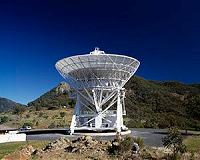
The Universe forms fewer stars than it used to, and a CSIRO study has now shown why - the galaxies are running out of gas. Dr Robert Braun (CSIRO Astronomy and Space Science) and his colleagues used CSIRO's Mopra radio telescope near Coonabarabran, NSW, to study far-off galaxies and compare them with nearby ones. Light (and radio waves) from the distant galaxies has taken time to travel to ... read more


STELLAR CHEMISTRY
Nigerian-built satellite acquires first image just days after launch

Jupiter-Bound Space Probe Captures Earth and Moon

Raytheon Ground System Passes Launch Test for Critical Polar Orbiting Satellite

Extreme 2010 Russian Fires and Pakistan Floods Linked Meteorologically

STELLAR CHEMISTRY
Northrop Grumman Business Unit Astro Aerospace Delivers Antennas to Lockheed Martin for GPS III

'Smart collars' will track wildlife

Researchers Improving GPS Accuracy In The Third Dimension

ASA Search and Rescue Software Used To Locate Capsized Boat Off Ireland

STELLAR CHEMISTRY
Are New England's Iconic Maples at Risk?

Argentina, Uruguay end pulp mill row

Reforestation and Lions in Greece

Cambodian 'Avatars' rally to save forest

STELLAR CHEMISTRY
Panda poop may be a treasure trove of microbes for making biofuels

Oceans of energy to power a planetary civilization

Testing the water for bioenergy crops

Making Tomorrow's Bioenergy Yeasts Strong

STELLAR CHEMISTRY
New DuPont Encapsulant Improves W and K Solar Modules

SolarWindow Coatings Lead to Increased Transparency and Improved Color

Siemens Upgrades West Chicago Plant To Produce PV Inverters

US PV Installations Forecast to Soar 166 Percent in 2011

STELLAR CHEMISTRY
Researchers build a tougher, lighter wind turbine blade

Wind Power Now Less Expensive Than Natural Gas In Brazil

BMW to power Leipzig factory by wind energy

Chinese turbine maker enters Irish project

STELLAR CHEMISTRY
China pulls 19 from flooded mine in rare rescue

3 rescued in China mine, 23 still trapped

Hopes fade for 26 trapped in China mine

Mongolian miner signs coal deal with China firms

STELLAR CHEMISTRY
Rights groups criticise China for jailing monk

China jails more Tibetan monks, US concerned

China urges end to 'cancer' of online rumours

China jails Tibetan monk for 11 years: Xinhua


Memory Foam Mattress Review
Newsletters :: SpaceDaily Express :: SpaceWar Express :: TerraDaily Express :: Energy Daily
XML Feeds :: Space News :: Earth News :: War News :: Solar Energy News
.

The content herein, unless otherwise known to be public domain, are Copyright 1995-2011 - Space Media Network. AFP and UPI Wire Stories are copyright Agence France-Presse and United Press International. ESA Portal Reports are copyright European Space Agency. All NASA sourced material is public domain. Additional copyrights may apply in whole or part to other bona fide parties. Advertising does not imply endorsement,agreement or approval of any opinions, statements or information provided by Space Media Network on any Web page published or hosted by Space Media Network. Privacy Statement