
 |
 |
 |
 |
 |
 |
 |
 |
 |

 |
Astronauts May Need More Intense Workouts
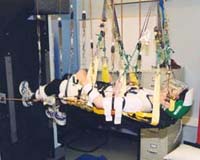
Muncie IN (SPX) Apr 03, 2009 A new study in the The Journal of Applied Physiology, suggests that astronauts need to modify their workouts to avoid extensive muscle loss during missions onboard the International Space Station (ISS). The latest NASA-sponsored research from Ball State University's Human Performance Laboratory (HPL) suggests that changes are needed to optimize the inflight exercise regimen for astronauts to improve their muscle performance while in space for extended stays. Average stays on the ISS run about six months, and preservation of crewmember health in zero-gravity environments is paramount for safety and mission success. Since exercise is the primary course of action to protect the cardiovascular system, bone, and skeletal muscles, astronauts need to find the optimal exercises to stay fit. The findings of the Ball State study were based in part on muscle biopsies taken from the astronauts, the first time this procedure has been allowed on crewmembers who have completed long-flight missions, according to Scott Trappe, HPL director. Working with NASA, Marquette University's biological sciences department, Wyle Integrated Science and Engineering Group in Houston, and the Medical College of Wisconsin, Trappe found that even while the crewmembers exercised, they still lost an average of 15 percent muscle mass and 20 to 30 percent loss of muscle performance. "By clinical standards, this is a massive loss," Trappe said. "This approaches what we see in aging populations in comparisons of a 20-year-old versus an 80-year-old. This poses risks to the crewmembers and could have a dramatic impact on locomotion and overall health, which would impact a variety of crewmembers' activities including future goals of planetary exploration." Trappe and the HPL team have been conducting NASA-funded, ground-based bed rest studies of long duration - between 60 and 90 days - parallel to their ISS research. Trappe said, "From our bed rest studies, we found that when high-intensity resistance and aerobic exercise are balanced correctly, this is an effective prescription that is quite therapeutic in protecting skeletal muscles in a simulated microgravity environment. The next step is to apply what we have learned from the ISS experience and implement the next generation of exercise prescription programs into the space environment. Intensity wins, hands down." In November 2008, NASA delivered an Advanced Resistance Exercise Device (ARED) to ISS that now offers astronauts greater capability to exercise at higher workloads and intensity. In addition to new equipment, the astronaut trainers have provided new exercise prescriptions customized for each crewmember during ARED use. Studies are underway at NASA to further develop and validate resistance exercise prescriptions designed to improve astronaut performance and health, as well as mitigate risk, according to Judith Hayes, NASA deputy chief, human adaptation and countermeasures division based at the Johnson Space Center in Houston. Share This Article With Planet Earth
Related Links American Physiological Society Space Tourism, Space Transport and Space Exploration News
 Solar Sail Update: New Opportunities
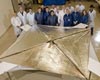 Pasadena CA (SPX) Apr 03, 2009
The Planetary Society remains committed to flying the first solar sail. Specifically, we aim to fly the first controlled flight of a spacecraft using light pressure to increase the orbit energy. |
|
|

| The content herein, unless otherwise known to be public domain, are Copyright 1995-2007 - SpaceDaily.AFP and UPI Wire Stories are copyright Agence France-Presse and United Press International. ESA Portal Reports are copyright European Space Agency. All NASA sourced material is public domain. Additional copyrights may apply in whole or part to other bona fide parties. Advertising does not imply endorsement,agreement or approval of any opinions, statements or information provided by SpaceDaily on any Web page published or hosted by SpaceDaily. Privacy Statement |
 del.icio.us
 Digg
Digg Reddit
 YahooMyWeb
 Google
 Facebook