
 |
 |
 |
 |
 |
 |
 |
 |
 |

 |
Astronomer searches for precursors of life
Ann Arbor, Mich., April 28, 2009 A University of Michigan astronomer says he will use the European Space Agency's Herschel Space Telescope to search for the precursors of life. Associate Professor Ted Bergin said many organic molecules that make up life on Earth have also been found in space. Bergin wants to study those chemical compounds to gain insights into how organic molecules form in space, and, possibly, how life formed on Earth. Bergin is a co-investigator on the Heterodyne Instrument for the Infrared aboard Herschel and a principal investigator on one of its key observing programs. Herschel is scheduled to be launched May 14, allowing astronomers to observe at the far-infrared wavelengths where organic molecules and water emit their chemical signatures. "We'll be studying the full extent of chemistry in space and we hope to learn what types of organics are out there as a function of their distance from a star," Bergin said. "And we want to understand the chemical machinery that led to the formation of these organics." Bergin said he also will be looking for water molecules in space. "Most of the water in the solar system is not where we are, but further out in the solar system," Bergin said. "Most theories suggest that the Earth formed dry and impacts from asteroids or other objects provided the water here." Share This Article With Planet Earth
Related Links Life Beyond Earth Lands Beyond Beyond - extra solar planets - news and science
 Scientists Give A Hand(edness) In Search For Aliens
 Washington DC (SPX) Apr 27, 2009
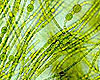
Visiting aliens may be the stuff of legend, but if a scientific team working at the National Institute of Standards and Technology (NIST) is right, we may be able to find extraterrestrial life even before it leaves its home planet-by looking for left- (or right-) handed light. |
|
|

| The content herein, unless otherwise known to be public domain, are Copyright 1995-2007 - SpaceDaily.AFP and UPI Wire Stories are copyright Agence France-Presse and United Press International. ESA Portal Reports are copyright European Space Agency. All NASA sourced material is public domain. Additional copyrights may apply in whole or part to other bona fide parties. Advertising does not imply endorsement,agreement or approval of any opinions, statements or information provided by SpaceDaily on any Web page published or hosted by SpaceDaily. Privacy Statement |
 del.icio.us
 Digg
Digg Reddit
 YahooMyWeb
 Google
 Facebook