|
 |
 |
 |
 |
 |
 |
 |
 |

 |
Astronomers Discover Youngest And Lowest Mass Dwarfs
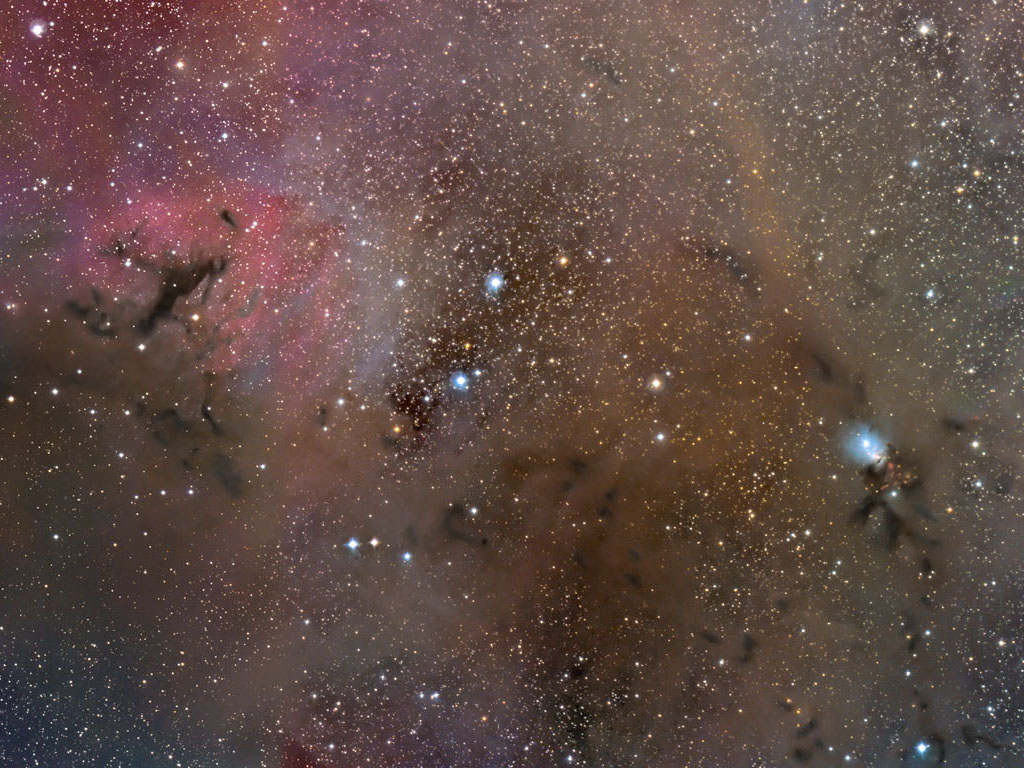
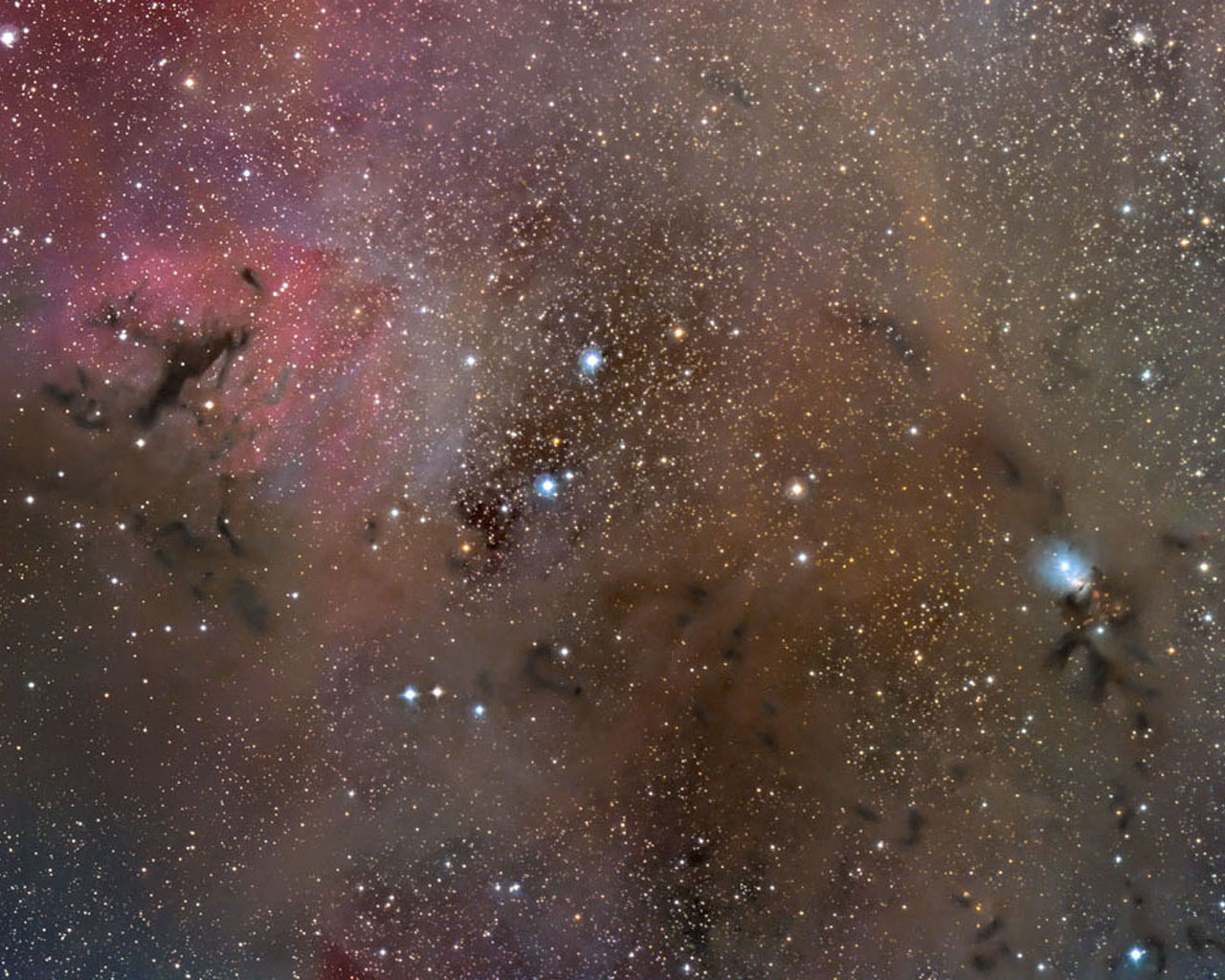
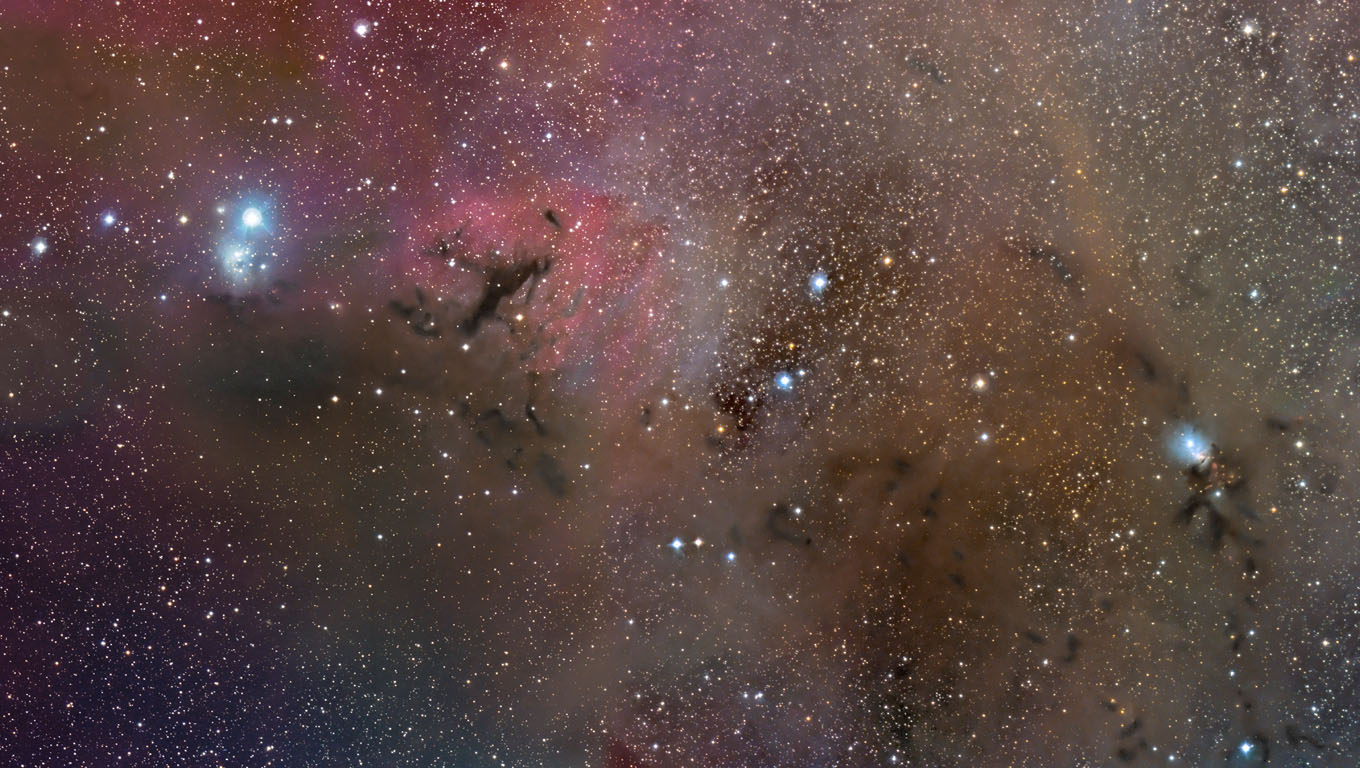
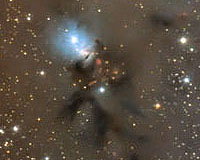
Hatfield UK (SPX) Apr 22, 2009 Astronomers have found three brown dwarfs with estimated masses of less than 10 times that of Jupiter, making them among the youngest and lowest mass sub-stellar objects detected in the solar neighborhood to date. The observations were made by a team of astronomers working at the Laboratoire d'Astrophysique de l'Observatoire de Grenoble (LAOG), France, using the Canada-France-Hawaii Telescope (CFHT). Andrew Burgess will be presenting the discovery at the European Week of Astronomy and Space Science at the University of Hertfordshire, Hatfield, on Wednesday 22nd April. The dwarfs were found in a star forming region named IC 348, which lies almost 1000 light years from the Solar System towards the constellation of Perseus. This cluster is approximately 3 million years old - extremely young compared to our 4.5 billion year old Sun - which makes it a good location in order to search for the lowest mass brown dwarfs. The dwarfs are isolated in space, which means that they are not orbiting a star, although they are gravitationally bound to IC 348. Their atmospheres all show evidence of methane absorption which was used to select and identify these young objects. "There has been some controversy about identifying young, low mass brown dwarfs in this region. An object of a similar mass was discovered in 2002, but some groups have argued that it is an older, cooler brown dwarf in the foreground coinciding with the line of sight. The fact that we have detected three candidate low-mass dwarfs towards IC 348 supports the finding that these really are very young objects," said Burgess. The team set out to find a population of these brown dwarfs in order to help theoreticians develop more accurate models for the distribution of mass in a newly-formed population, from high mass stars to brown dwarfs, which is needed to test current star formation theories. The discovery of the dwarfs in IC 348 has allowed them to set new limits on the lowest mass objects. "Finding three candidate low-mass dwarfs towards IC 348 backs up predictions for how many low-mass objects develop in a new population of stars. Brown dwarfs cool with age and current models estimate that their surfaces are approximately 900-1000 degrees Kelvin (about 600-700 degrees Celsius). That's extremely cool for objects that have just formed, which implies that they have the lowest masses of any of this type of object that we've seen to date," said Burgess. Share This Article With Planet Earth
Related Links Observatoire de Grenoble Stellar Chemistry, The Universe And All Within It
 Hubble Celebrates 19th Anniversary With Fountain Of Youth
 Garching, Germany (SPX) Apr 22, 2009
To commemorate the NASA/ESA Hubble Space Telescope's 19 years of success, the orbiting telescope has photographed a peculiar system of galaxies known as Arp 194. This interacting group contains several galaxies along with a "cosmic fountain" of stars, gas, and dust that stretches over 100,000 light years. |
|
|

| The content herein, unless otherwise known to be public domain, are Copyright 1995-2007 - SpaceDaily.AFP and UPI Wire Stories are copyright Agence France-Presse and United Press International. ESA Portal Reports are copyright European Space Agency. All NASA sourced material is public domain. Additional copyrights may apply in whole or part to other bona fide parties. Advertising does not imply endorsement,agreement or approval of any opinions, statements or information provided by SpaceDaily on any Web page published or hosted by SpaceDaily. Privacy Statement |
 del.icio.us
 Digg
Digg Reddit
 YahooMyWeb
 Google
 Facebook