
 |
 |
 |
 |
 |
 |
 |
 |
 |

 |
Atlas V/WGS-2 Launch Set For April 3
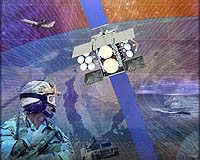
Cape Canaveral FL (SPX) Apr 02, 2009 The U.S. Air Force will launch the second Wideband Global Communications satellite aboard a United Launch Alliance Atlas V rocket from Space Launch Complex 41 here April 3. The launch window extends from 8:31 to 9:33 p.m. EDT. This will be the second attempt to launch the Atlas V. The launch team detected an anomalous leak rate in the Centaur upper stage oxidizer valve during a March 17 launch attempt. These satellites are designed to provide high-capacity communications to our nation's military forces. It will augment and eventually replace the aging Defense Satellite Communication System, which has been the Department of Defense's backbone for satellite communications over the last two decades. The satellite provides a giant leap in communications bandwidth and technology. "We are extremely proud to be a part of the team that will launch the second Wideband Global SATCOM satellite," said Brig. Gen. Edward L. Bolton Jr., 45th Space Wing commander. "The launch of this satellite will provide our military with the capacity, connectivity, and flexibility to successfully complete its mission." First launched in 2007, WGS will be a constellation of five satellites that will supply service for military leaders to command and control their tactical forces. After the launch of WGS-2, WGS-3 will round out the remainder of the first phase of satellites. The WGS-3 satellite has completed its test programs and is slated for later this year. Share This Article With Planet Earth
Related Links Webcast: The launch can be viewed Launch Pad at Space-Travel.com
 ESA And CNES Sign Contract On Guiana Space Centre
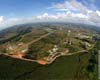 Paris, France (ESA) Mar 30, 2009
On 25 March, ESA and CNES, the French Space Agency, signed a 435 million Euro contract assuring the availability of the CSG launch range for ESA programmes and activities and for the exploitation of Ariane, Vega and Soyuz launchers over the period 2009 to 2013. |
|
|

| The content herein, unless otherwise known to be public domain, are Copyright 1995-2007 - SpaceDaily.AFP and UPI Wire Stories are copyright Agence France-Presse and United Press International. ESA Portal Reports are copyright European Space Agency. All NASA sourced material is public domain. Additional copyrights may apply in whole or part to other bona fide parties. Advertising does not imply endorsement,agreement or approval of any opinions, statements or information provided by SpaceDaily on any Web page published or hosted by SpaceDaily. Privacy Statement |
 del.icio.us
 Digg
Digg Reddit
 YahooMyWeb
 Google
 Facebook