
 |
 |
 |
 |
 |
 |
 |
 |
 |

 |
Australia cracks down on Great Barrier Reef pollution
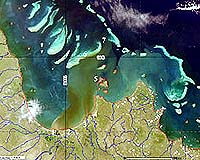
Sydney (AFP) Jan 29, 2009 Australia announced a crackdown on pollution of the Great Barrier Reef Thursday as the World Heritage-listed site comes under increasing threat from toxic chemicals and climate change. Farmers who allow pesticides and fertilisers to run off into the seas around the reef -- described as the world's largest living organism -- will be fined under new conservation laws, officials said. "I want my grandchildren to see this natural wonder, and I want to be able to say to them that we did everything we possibly could to protect it," said Queensland state Premier Anna Bligh. Under a voluntary plan adopted five years ago, farmers in the northern state which borders the reef said they had reduced fertiliser use by 20 percent. But Bligh said the voluntary measures had not gone far enough, and legislation was required. "An 80 percent reduction in run off of fertiliser nitrogen would buy the Great Barrier Reef as much as 65 to 70 years before catastrophic bleaching becomes a regular event," she told reporters. The 345,000 square kilometre (133,000 square mile) tourist attraction, off Australia's northeast coast, was suffering "long-term decline" from soil, fertilisers and pesticides, Bligh said. Laws would be introduced by June restricting the level and type of damaging chemicals allowed to run into waterways that flowed into the reef. Farm practices such as over-grazing and tree-clearing would also be regulated, and water monitoring would take place to ensure compliance. Any breach would be met with a fine, she said. Conservation group WWF last week estimated that up to a million megalitres of pollution had flowed into the reef following a recent cyclone, equivalent to 400,000 Olympic-size swimming pools. Coral growth has slowed markedly on the reef since 1990, believed to be caused by warmer seas and higher acidity -- the result of global warming. Share This Article With Planet Earth
Related Links Water News - Science, Technology and Politics
 Dramatic Expansion Of Dead Zones In The Oceans
 Copenhagen, Denmark (SPX) Jan 28, 2009
Unchecked global warming would leave ocean dwellers gasping for breath. Dead zones are low-oxygen areas in the ocean where higher life forms such as fish, crabs and clams are not able to live. In shallow coastal regions, these zones can be caused by runoff of excess fertilizers from farming. |
|
|

| The content herein, unless otherwise known to be public domain, are Copyright 1995-2007 - SpaceDaily.AFP and UPI Wire Stories are copyright Agence France-Presse and United Press International. ESA Portal Reports are copyright European Space Agency. All NASA sourced material is public domain. Additional copyrights may apply in whole or part to other bona fide parties. Advertising does not imply endorsement,agreement or approval of any opinions, statements or information provided by SpaceDaily on any Web page published or hosted by SpaceDaily. Privacy Statement |
 del.icio.us
 Digg
Digg Reddit
 YahooMyWeb
 Google
 Facebook