
 |
 |
 |
 |
 |
 |
 |
 |
 |

 |

Sydney (UPI) Jul 12, 2010 Coming through a decade of drought said to be its worst in a century, Australia has turned to desalination as part of the government's measures to beef up water supply systems. State governments are already investing $13.2 billion in desalination plants in Melbourne, Sydney, Perth, Adelaide and on the Gold Coast. In two years, when the final plant is expected to be in operation, seawater is expected to account for 30 percent of the cities' needs. But the energy-intensive process of removing salt from seawater consumes vast amounts of power, with energy accounting for 50 percent of its cost. Because Australia relies on coal for most of its electricity generation, its desalination plants therefore emit greenhouse gases and contribute to the global warming that is aggravating the country's water shortage, environmentalists say. While Sydney's Kurnell desalination plant, opened in February, is 100 percent offset by wind energy, opponents claim that energy could have been used to offset coal generation elsewhere. Australia's Water Services Association says that households in cities with the new desalination plants can expect their water bills to double over the next few years. Already, Australia has seen its water prices rise as much as 22 percent this month. The association's executive director, Ross Young, said there was a "direct link" between the costs of building and operating desalination plants and higher water bills, the Australian newspaper reports. Desalination plants use 21 times more electricity than conventional water systems to produce 264 gallons of water, typically the amount used daily by a family of four, the association says. Water levels in many of the country's reservoirs have increased somewhat as a result of recent heavy rains, prompting the association last week to urge state governments to switch off desalination plants when they weren't essential. For example, the reservoir in back of Wivenhoe, the largest dam in southeastern Queensland, had reached 98 percent of capacity after dropping to just 16 percent at one point during Australia's drought. "If you've got all your dams overflowing, it's very difficult to justify them having the desalination plants still running," Young said. "It would save people money and it would save greenhouse gas emissions," he said. But a Water Corporation representative in Perth said that during the past 10 years, its dams haven't risen above a level of 53 percent. He said it was "unlikely in the face of a drying climate" that Perth's dams would ever fill up again.
Share This Article With Planet Earth
Related Links Water News - Science, Technology and Politics

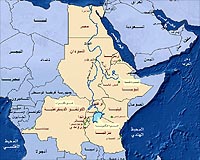 Ethiopia seeks to reassure Egypt over Nile waters
Addis Ababa (AFP) July 8, 2010 Ethiopia has reassured Egypt that a new pact it signed with four other countries on the sharing of water from the River Nile will not harm Egypt. Ethiopia, Kenya, Rwanda, Tanzania and Uganda in May signed the Nile Basin Cooperative Framework meant to replace a 1959 accord between Egypt and Sudan that gives them control of more than 90 percent of the water flow. "No one would be left disa ... read more |
|
|
| The content herein, unless otherwise known to be public domain, are Copyright 1995-2010 - SpaceDaily. AFP and UPI Wire Stories are copyright Agence France-Presse and United Press International. ESA Portal Reports are copyright European Space Agency. All NASA sourced material is public domain. Additional copyrights may apply in whole or part to other bona fide parties. Advertising does not imply endorsement,agreement or approval of any opinions, statements or information provided by SpaceDaily on any Web page published or hosted by SpaceDaily. Privacy Statement |


 del.icio.us
 Digg
Digg Reddit
 YahooMyWeb
 Google
 Facebook


