
 |
 |
 |
 |
 |
 |
 |
 |
 |

 |

Sydney (AFP) Aug 3, 2010 Australia and Japan boast some of the planet's most diverse oceans but thousands of organisms remain unknown to science and global warming is a huge marine peril, a major new census says. Both Australia and Japan have some 33,000 known species, according to the 10-year scientific survey of marine life called "What Lives in the Sea". But there could be as many as 250,000 species in Australia's vast waters, which are bounded by three oceans and four seas and extend from the coral-rich tropics to the icy southern pole, it said. "This constitutes a vast array of highly diverse habitats and ocean features, but many have received limited if any exploration," wrote lead author Alan Butler from Australia's Commonwealth Scientific and Industrial Research Organisation. Most of the 33,000 species recorded for Australia were animals, including fish, seabirds, and marine mammals, with a continuing high rate of discovery of new fish and shark species. Butler estimated that only 20 percent of Australia's total marine species had so far been found. Life was most heavily concentrated in the northeast, which is home to the World Heritage-listed Great Barrier Reef and is filled with colourful corals as well as dolphins, turtles and dugongs. "Australia is of tremendous ecological interest," said a spokeswoman for the marine census, Jessie Ausubel. "It is advanced in creating protected marine areas, around coral reefs but also around its deep-sea areas." Katsunori Fujikura of Japan's Agency for Marine-Earth Science and Technology said about 155,000 species had been spotted in Japanese waters, accounting for a mere 30 percent of all estimated life, and only 33,000 officially registered. "The reason why such high diversity occurs is undoubtedly the varied environments existing in Japanese waters," said Fujikura. Roughly 11 times the size of its land mass, Japan's waters feature coral reefs, ice-bound seas and trenches 10 kilometres (six miles) deep. Strong ocean currents mean few -- just 5.6 percent -- of its species are unique to Japan. By contrast, 19 percent of New Zealand's 17,000 marine species are found only around the isolated island state, and Antarctica's Southern Ocean also hosts many species not found anywhere else. "Most species in the Southern Ocean are rare, with over half of the known benthic (sea-bed) species having only been found once or twice," said report author Huw Griffiths, from the British Antarctic Survey. The remote and hostile Antarctic region is home to 8,800 recorded species, with moss animals, sponges and small crustaceans richly represented. But more than 90 percent of its marine environment is more than a kilometre below the surface, and less than 11 percent of its total deep-sea area has been plumbed, "implying there are still a great many species yet to be described", Griffiths said. He said charting Antarctica's marine life should be a "major priority" in the race against global warming, with its seas already "some of the fastest warming areas on Earth". "Climate change is a significant potential threat to the long-term survival of Antarctic marine communities," he wrote. Sea ice formation had slowed by 10 percent per decade and several floating ice shelves had collapsed, "dramatically altering" habitats, Griffiths said. Growing acidification of the world's oceans was also predicted to hit the Southern Ocean first, threatening entire coral and mollusc species with extinction, he added. Australia in some ways is a "beacon" of hope for marine life, said Ausubel, the census spokeswoman. "Australia succeeded in protecting its biodiversity, it's very significant for the entire world," she said. "At the same time the oceans are connected so one country alone cannot accomplish complete protection."
Share This Article With Planet Earth
Related Links Follow the Whaling Debate

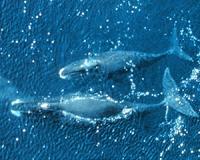 Whale sense of smell surprises scientists
Rootstown, Ohio (UPI) Jul 23, 2010 Bowhead whales can smell the air, scientists say, contradicting previous thought that whales and dolphins completely lacked the ability. Researchers dissecting bowhead whale bodies discovered olfactory hardware linking the brain and nose and the protein receptors required to smell, BBC news reported Friday. The discovery came as a surprise, a scientist who did the dissections sai ... read more |
|
|
| The content herein, unless otherwise known to be public domain, are Copyright 1995-2010 - SpaceDaily. AFP and UPI Wire Stories are copyright Agence France-Presse and United Press International. ESA Portal Reports are copyright European Space Agency. All NASA sourced material is public domain. Additional copyrights may apply in whole or part to other bona fide parties. Advertising does not imply endorsement,agreement or approval of any opinions, statements or information provided by SpaceDaily on any Web page published or hosted by SpaceDaily. Privacy Statement |


 del.icio.us
 Digg
Digg Reddit
 YahooMyWeb
 Google
 Facebook


