
 |
 |
 |
 |
 |
 |
 |
 |
 |

 |
Australian oil spill '10 times worse' than thought: official
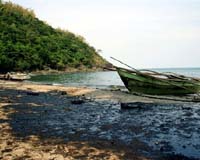
Sydney (AFP) March 14, 2009 An oil spill polluting popular tourist beaches on Australia's northeast coast is 10 times worse than originally reported, the state government said Saturday. Dozens of beaches have been declared disaster zones after they were fouled by a massive oil slick spilled from the Hong Kong-flagged ship Pacific Adventurer in wild seas on Wednesday. Initial estimates put the spill at 20-30 tonnes of oil but "it is now apparent that it was about 230 tonnes," Queensland state's Deputy Premier Paul Lucas told public radio. About 60 kilometres (almost 40 miles) of beaches have been hit by the oil, with Moreton Island about 40 kilometres off Brisbane city the worst affected. The crisis was sparked when high seas whipped up by Cyclone Hamish toppled 31 containers of ammonium nitrate fertiliser from the ship's deck. As they fell, the containers punctured the hull, before taking 620 tonnes of the explosive chemical to the ocean floor. The ship's owners, Swire Shipping, said an inspection of the hull by a diver on Friday had found that the damage was greater than initially believed and "it is likely that substantially more oil has spilled than the earlier estimate". Swire faces 1.5 million dollars (977,000 US dollars) in fines if found guilty of environmental or maritime breaches "The company very much regrets the environmental impact caused as a consequence of the vessel being caught in Cyclone Hamish," it said. "The company and its insurers will meet all their responsibilities." Swire had to launch a separate clean-up effort Friday after the ship docked and leaked more oil into the river running through Brisbane, Queensland's capital. Apart from the oil damage, experts fear the fertiliser could cause harmful algal blooms, suffocate fish and kill natural habitats. Moreton Bay, a marine sanctuary, is home to a range of sea birds as well as turtles, dolphins and pelicans. Hundreds of people are working to clean the beaches and save affected wildlife.
earlier related report Queensland state's marine safety authority said up to 100 tonnes of fuel were now believed to have spilled from the Hong Kong-flagged ship Pacific Adventurer amid cyclonic conditions early Wednesday. Moreton and Bribie Islands, and parts of the popular Sunshine Coast, were declared disaster zones. "This may well be the worst environmental disaster we have seen in southeast Queensland," the state's leader, Anna Bligh, said. Initial estimates put the spill at 30 tonnes but authority spokesman John Watkinson said up to 100,000 litres could be washing up along a 60-kilometre (40-mile) stretch of the region's beaches, sickening local wildlife. The ship's owners, Swire Shipping, said they had sent a diver to inspect the hull late Friday. "This shows that the damage suffered as a result of Cyclone Hamish is greater than initially understood and it is likely that substantially more oil has spilled than the earlier estimate of 42.5 cubic metres," Swire said in a statement. Swire faces 1.5 million dollars (977,000 US dollars) in fines if found guilty of environmental or maritime breaches "The company very much regrets the environmental impact caused as a consequence of the vessel being caught in Cyclone Hamish," it said. "The company and its insurers will meet all their responsibilities." Swire had to launch a separate clean-up effort Friday afternoon after leaking a further lot of oil into the river which runs through Brisbane, the state's capital city. The "small" spill, contained by barriers surrounding the ship, took place during testing to determine how much oil was lost in the first leak, Swire said. Describing it as a "potential environmental tragedy", Prime Minister Kevin Rudd pledged full government support for the clean-up effort, which could cost millions of dollars. Officials warned the situation was likely to worsen, with sludge expected to wash ashore for weeks. A team of 130 specialists was Friday mopping up the mess and attempting to prevent it from spreading into nearby mangrove swamps and waterways. The oil flooded Moreton Bay after wild seas whipped up by Cyclone Hamish toppled 31 containers of ammonium nitrate fertiliser from the ship's deck. As they fell, the containers punctured the hull, before taking 620 tonnes of the explosive chemical to the ocean floor. Experts fear the fertiliser, a nutrient-rich chemical, could cause harmful algal blooms, suffocate fish and kill natural habitats. Moreton Bay, a marine sanctuary, is home to a range of sea birds and other creatures, including turtles, dolphins and pelicans. A dozen sickened animals had been discovered, but the environmental protection authority said that was likely to rise. "The flow-on effects of oil spills can be substantive," an authority spokesman said. "The longer-term impacts are yet to be realised." Share This Article With Planet Earth
Related Links Our Polluted World and Cleaning It Up
 Yellowstone Alga Detoxifies Arsenic
 Bozeman MT (SPX) Mar 14, 2009
Arsenic may be tough, but scientists have found a Yellowstone National Park alga that's tougher. |
|
|

| The content herein, unless otherwise known to be public domain, are Copyright 1995-2007 - SpaceDaily.AFP and UPI Wire Stories are copyright Agence France-Presse and United Press International. ESA Portal Reports are copyright European Space Agency. All NASA sourced material is public domain. Additional copyrights may apply in whole or part to other bona fide parties. Advertising does not imply endorsement,agreement or approval of any opinions, statements or information provided by SpaceDaily on any Web page published or hosted by SpaceDaily. Privacy Statement |
 del.icio.us
 Digg
Digg Reddit
 YahooMyWeb
 Google
 Facebook