
 |
 |
 |
 |
 |
 |
 |
 |
 |

 |
Australian outback desert off limits for summer
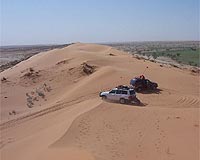
Sydney (AFP) Nov 11, 2008 South Australia's outback Simpson Desert will be closed for the first time this summer to prevent visitors from dying in the extreme heat, officials said Tuesday. The Simpson Desert Conservation Park and Regional Reserve in South Australia will be off limits from December 1 to March 15 each year, beginning next month, the South Australian Department for Environment and Heritage said. "Temperatures in the Simpson Desert during summer are extreme, with daytime temperatures of between 40 and 50 degrees Celsius (104 and 122 Fahrenheit) common," the department's head of regional operations, Trevor Naismith, said. "Most people that cross the desert during summer are from overseas, and many do not have the driving experience for such a crossing, or a properly equipped vehicle with radio communications and recovery gear in case of an emergency." Naismith said during summer sand dunes were soft and constantly changing shape, increasing the chance of vehicles becoming bogged down, while there was a greater risk of vehicle breakdown during the hotter months. "At a time when there are very few vehicles in the desert to provide assistance in a timely manner, this is potentially a fatal situation, especially for the inexperienced, ill-prepared visitor," he said. "This high risk also extends to emergency personnel who are called out to help stranded visitors during this period." Naismith said only about 35 vehicles crossed the 170 square kilometre (68,000 square mile) Simpson Desert each summer but deaths had occurred in the past and there had been a number of recent near-misses. "The Simpson Desert is one of the most fascinating, majestic places in Australia, but in the middle of summer it's also one of the harshest and the least hospitable areas, and potentially one of the most unforgiving, dangerous places," he told national news agency AAP. The Simpson Desert, which sits in the dry, inhospitable heart of the Australian continent, also crosses into the Northern Territory and Queensland where it is understood officials are considering taking similar action. Share This Article With Planet Earth
Related Links Dirt, rocks and all the stuff we stand on firmly
 Virginia Tech Engineers Identify Conditions That Initiate Erosion
 Blacksburg VA (SPX) Nov 06, 2008
Wind, water, and waves erode billions of tons of soil from the earth's surface. As a result, many rivers are plagued with excessive amounts of suspended sediment. According to the U.S. Environmental Protection Agency, such eroded sediment is the largest nonpoint source pollution in the environment. |
|
|

| The content herein, unless otherwise known to be public domain, are Copyright 1995-2007 - SpaceDaily.AFP and UPI Wire Stories are copyright Agence France-Presse and United Press International. ESA Portal Reports are copyright European Space Agency. All NASA sourced material is public domain. Additional copyrights may apply in whole or part to other bona fide parties. Advertising does not imply endorsement,agreement or approval of any opinions, statements or information provided by SpaceDaily on any Web page published or hosted by SpaceDaily. Privacy Statement |
 del.icio.us
 Digg
Digg Reddit
 YahooMyWeb
 Google
 Facebook