
 |
 |
 |
 |
 |
 |
 |
 |
 |

 |
BMD Watch: S-400s For Belarus Part Two
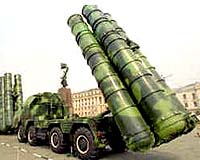
Washington (UPI) April 16, 2009 The announcement of Russia's latest agreement to provide Belarus with S-400 air-defense systems is of much more than routine significance. Russian military analysts say the S-400 Triumf -- NATO designation SA-21 Growler -- is the most long-range, high-altitude and effective air-defense system in the world, arguing that it combines the best characteristics of the U.S. Patriot PAC-3 and the Israeli Arrow-2 interceptors. However, progress on actually manufacturing the demanding, high-tech system has been slow, especially with so many competing claims on the resources of Russia's aerospace companies. As we reported earlier this week, the Russian air force has even been driven to the expedient of buying a number of Israel's excellent unmanned aerial surveillance spy drones, as Deputy Defense Minister Vladimir Popovkin essentially admitted, to reverse engineer them because the major Russian corporations like MiG and Russian Helicopters had fallen so behind schedule in developing and manufacturing their own new unmanned aerial vehicle systems. Russian Defense Minister Anatoly Serdyukov announced only on March 17 this year that the second regiment equipped with S-400s had just been operationally deployed. Yet even before a third S-400 air-defense system has been deployed, the Kremlin has already announced it is going to equip the neighboring state of Belarus with them, the RIA Novosti news agency reported on April 9. The S-400s will be supplied as part of the new comprehensive mutual air-defense agreement between Russia and Belarus, under its longtime authoritarian ruler President Alexander Lukashenko, that was concluded in February. "One of the provisions of the agreement is to upgrade the network. It must be equipped with the most advanced weaponry," Russia's first deputy air force commander Lt. Gen. Vadim Volkovitsky announced on April 9, according to a report from the RIA Novosti news agency. The news agency said the S-400 Triumf system had been built with the mission of shooting down airborne targets at ranges as great as 240 miles, or 400 kilometers. RIA Novosti claimed that the S-400 therefore had twice the range of the U.S. MIM-104 Patriot and 2.5 times the range of its predecessor, the old but still formidable Russian and Soviet S-300 PMU-2. Russian experts also say the S-400 functions as an effective anti-ballistic missile system that is effective at the very least against intermediate-range ballistic missiles with a range of 300 miles to 3,000 miles. RIA Novosti reported that the S-400 had the capability to hit and annihilate stealth-equipped Western and U.S. aircraft, cruise missiles and ballistic missiles at ranges up to 3,500 kilometers, or 2,200 miles. It could fly at a maximum velocity of 4.8 kilometers per second -- 3 miles per second. That translates into a speed of 10,800 miles per hour. That performance would certainly be insufficient to intercept any intercontinental ballistic missile or any multiple independently targeted re-entry vehicle warhead delivered by an ICBM. But it would be fast enough to shoot down IRBMs. Part 3: Russia's new joint air defense with Belarus has real teeth Share This Article With Planet Earth
Related Links Learn about nuclear weapons doctrine and defense at SpaceWar.com Learn about missile defense at SpaceWar.com All about missiles at SpaceWar.com Learn about the Superpowers of the 21st Century at SpaceWar.com
 BMD Watch: S-400s For Belarus Part One
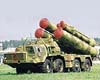 Washington (UPI) April 15, 2009
 It comes as no real surprise, but Russia's decision to supply neighboring Belarus with its most advanced anti-missile defense system has profound geopolitical implications and adds significantly to the growing divisions and tensions that are once again tearing Europe in half. |
|
|

| The content herein, unless otherwise known to be public domain, are Copyright 1995-2007 - SpaceDaily.AFP and UPI Wire Stories are copyright Agence France-Presse and United Press International. ESA Portal Reports are copyright European Space Agency. All NASA sourced material is public domain. Additional copyrights may apply in whole or part to other bona fide parties. Advertising does not imply endorsement,agreement or approval of any opinions, statements or information provided by SpaceDaily on any Web page published or hosted by SpaceDaily. Privacy Statement |
 del.icio.us
 Digg
Digg Reddit
 YahooMyWeb
 Google
 Facebook