
 |
 |
 |
 |
 |
 |
 |
 |
 |

 |
Birds' Strategic Mobbing Fends Off Parasitic Invaders
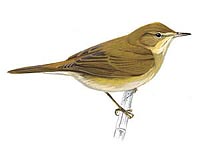
Cambridge, UK (SPX) Feb 04, 2009 Reed warblers use mobbing as a front line of nest defense against parasitic cuckoos, according to a new report published online in Current Biology, a Cell Press publication. Cuckoos act as parasites by laying their eggs in the nests of other birds, reed warblers in particular, burdening their hosts with the trouble of raising young that don't belong to them. "Historically, determination of the effectiveness of nest defense against brood parasitism has proven difficult," said Justin Welbergen and Nick Davies of the University of Cambridge. "Our paper is the first to present evidence that birds with nests that are at risk of parasitism from common cuckoos benefit from mobbing." The researchers also found that the warblers are savvy about when to employ this costly defense strategy, altering their behavior on the basis of the risk that a cuckoo mother will take advantage of them. As with all parasites and their hosts, the relationship between cuckoos and reed warblers sets up an evolutionary arms race, Welbergen explained, and birds that fall victim to brood parasitism do have other ways of setting things straight. For instance, they may reject eggs that don't look like their own. Cuckoos have responded over evolutionary time to such defenses, laying eggs that mimic those of reed warblers. However, Welbergen says, the most immediate way a reed warbler can avoid being parasitized is to prevent cuckoos from laying their eggs in the first place by aggressively defending their nests. Such an offensive behavior is not without risks, they said, noting that it may attract other enemies. Reed warblers might also mistakenly mob a sparrowhawk, a bird that preys on reed warblers and resembles the cuckoo. To put this strategy to the test, Welbergen and Davies placed model cuckoos at the nests of reed warblers after eggs had been laid. They then made note of the warblers' defensive responses and found that in about half of the cases, warblers mobbed the models with aggressive calls and attacks. Birds that mobbed the model cuckoo were significantly less likely to be parasitized in high-risk locales compared to reed warblers that didn't mob, they found. In lower-risk areas, mobbing had no such benefit. Indeed, there were hints that such behavior might attract cuckoos under those circumstances. Welbergen and Davies also found that the reed warblers were more likely to mob model cuckoos if they were at greater risk of parasitism. They reserve that strategy only for cuckoos, further evidence that mobbing is adaptive in the context of brood parasitism. "Our study shows that in a world where brood parasitism varies along temporal and spatial dimensions, and where the parasite resembles a deadly predator, reed warblers vary their nest defense strategically according to the likelihood that they will be parasitized," the researchers concluded. The findings show that reed warblers follow a "defense-in-depth strategy," a concept borrowed from the military in which the birds use sequential lines of defense to fend off their enemies. Mobbing behavior also has implications for the evolution of other defensive lines, such as egg and chick discrimination, Welbergen noted. "If hosts are able to effectively reduce parasitism by vigorously defending their nests, selection for further defenses will be weaker," he said. Share This Article With Planet Earth
Related Links University of Cambridge Darwin Today At TerraDaily.com
 Endangered sites see boom in 'tourism of doom'
 Madrid (AFP) Feb 3, 2009
Tracking endangered wildlife in politically troubled, impoverished Zimbabwe might not seem the ideal holiday spot but it's in hot demand in the travel industry's latest niche market -- "tourism of doom". |
|
|

| The content herein, unless otherwise known to be public domain, are Copyright 1995-2007 - SpaceDaily.AFP and UPI Wire Stories are copyright Agence France-Presse and United Press International. ESA Portal Reports are copyright European Space Agency. All NASA sourced material is public domain. Additional copyrights may apply in whole or part to other bona fide parties. Advertising does not imply endorsement,agreement or approval of any opinions, statements or information provided by SpaceDaily on any Web page published or hosted by SpaceDaily. Privacy Statement |
 del.icio.us
 Digg
Digg Reddit
 YahooMyWeb
 Google
 Facebook