
 |
 |
 |
 |
 |
 |
 |
 |
 |

 |
Capturing A Solar Storm In 3D
Laurel MD (SPX) Apr 17, 2009 The APL-built and -operated twin STEREO observatories have made the first 3-D measurements of solar explosions, known as coronal mass ejections, enabling scientists to see their size and shape, and image them as they travel approximately 93 million miles from the sun to Earth. Scientists will be able to use this information to help determine how these strong solar storms will impact Earth's atmosphere. The Solar TErrestrial RElations Observatory's science data is enhanced, in part, due to the STEREO guidance and control team at the Johns Hopkins University Applied Physics Laboratory (APL), in Laurel, Md. They're helping mission scientists more easily reconstruct 3-D imagery by very accurately pointing the spacecraft and reducing its jitter or movement. "By tuning each spacecraft's control software, much like a race car's control system is tuned for optimal performance on the track, spacecraft system performance is now approximately five times better than at launch and seven times better than specifications require," says Andy Driesman, STEREO's system engineer at APL. Since launch in 2006, the APL team has been proactively tuning spacecraft and ground systems, maximizing data return and optimizing contact with satellites used to downlink data. The APL-based STEREO mission operations center downloads 6-9 gigabytes of data each day - approximately 20-80 percent more data than the science team expected. Coronal mass ejections are powerful solar explosions that can have damaging effects when hitting Earth's upper atmosphere at speeds of nearly one million miles-per-hour. These giant clouds of electrically charged gas called plasma can disrupt satellite communications, GPS and/or cell phone signals, or induce large currents in power grids, which can cause power disruptions or black outs. "Using STEREO observations, we can extract a CME's properties and are able to determine when it will reach Earth, at what speed, and with how much energy it will impact Earth's magnetosphere," says Angelos Vourlidas, of the Naval Research Laboratory, and project scientist for STEREO's SECCHI (Sun Earth Connection Coronal and Heliospheric Investigation) imaging suite. Disruptions to the magnetic envelope surrounding Earth can often trigger auroras. These bright bands of light, often visible at night in northern and southern regions, can interfere with communications between air-traffic controllers and pilots flying near Earth's polar regions. Share This Article With Planet Earth
Related Links STEREO Johns Hopkins University Applied Physics Laboratory Solar Science News at SpaceDaily
 NASA Spacecraft Show Three-Dimensional Anatomy Of A Solar Storm
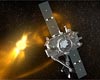 Greenbelt, MD (SPX) Apr 17, 2009
Twin NASA spacecraft have provided scientists with their first view of the speed, trajectory, and three-dimensional shape of powerful explosions from the Sun known as coronal mass ejections, or CMEs. This new capability will dramatically enhance scientists' ability to predict if and how these solar tsunamis could affect Earth. |
|
|

| The content herein, unless otherwise known to be public domain, are Copyright 1995-2007 - SpaceDaily.AFP and UPI Wire Stories are copyright Agence France-Presse and United Press International. ESA Portal Reports are copyright European Space Agency. All NASA sourced material is public domain. Additional copyrights may apply in whole or part to other bona fide parties. Advertising does not imply endorsement,agreement or approval of any opinions, statements or information provided by SpaceDaily on any Web page published or hosted by SpaceDaily. Privacy Statement |
 del.icio.us
 Digg
Digg Reddit
 YahooMyWeb
 Google
 Facebook