
 |
 |
 |
 |
 |
 |
 |
 |
 |

 |
China Beidou Navigation System Expected To Cover World
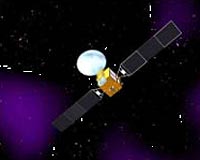
Beijing (XNA) Apr 16, 2009 With the successful launch of the second Beidou navigation satellite on March 15, China's independently-developed Beidou satellite navigation system has entered a peak network formation period from this year. A Global Positioning System is expected to be established around 2020. On the morning of April 15, China sent the second Beidou navigation satellite into the orbit with the carrier rocket of "Long March 3C" at the Xichang Satellite Launch Center. The Beidou satellite navigation and positioning system, independently developed by China, consists of satellites that will run on three different types of orbits - the geostationary orbit, the inclined geosynchronous satellite orbit and the medium and high earth orbit. The development of this system is divided into two stages. In the first stage, a regional navigation and positioning system will be established in 2011, covering China and its neighboring areas. Since 2000, China has launched three "Beidou Navigation Test Satellites" gradually setting up a Beidou navigation test system. In the Wenchuan Earthquake last year, this system played an important role. China is currently developing the second generation Beidou satellite navigation and positioning system, and in April 2007, it launched the first satellite. The satellite launched today is the second one belonging to the system. A satellite navigation and positioning system is an important space infrastructure. It combines the merits of traditional astronavigation and ground-based radio navigation and positioning systems, which is similar to establishing a radio beacon station in space. Currently, China mainly relies on US GPS services to provide navigation and positioning service. Upon completion, the Beidou system will enable China to free itself from the reliance on foreign satellite navigation systems in satellite application, and will also boost the development of a large number of hi-tech sectors to form new sources of economic growth. Satellite navigation and positioning technologies have been widely applied in areas including communication and transportation, essential surveying and mapping, engineering investigation, resource survey, seismic monitoring and more. Share This Article With Planet Earth
Related Links - GPS Applications, Technology and Suppliers
 China launches global positioning satellite: report
 Beijing (AFP) April 15, 2009
China launched a navigational satellite Wednesday, the nation's space administration reported, the second in a series of up to 30 orbiters to comprise a global positioning network. |
|
|

| The content herein, unless otherwise known to be public domain, are Copyright 1995-2007 - SpaceDaily.AFP and UPI Wire Stories are copyright Agence France-Presse and United Press International. ESA Portal Reports are copyright European Space Agency. All NASA sourced material is public domain. Additional copyrights may apply in whole or part to other bona fide parties. Advertising does not imply endorsement,agreement or approval of any opinions, statements or information provided by SpaceDaily on any Web page published or hosted by SpaceDaily. Privacy Statement |
 del.icio.us
 Digg
Digg Reddit
 YahooMyWeb
 Google
 Facebook