
 |
 |
 |
 |
 |
 |
 |
 |
 |

 |
China Plans To Launch Third Ocean Survey Satellite In 2010
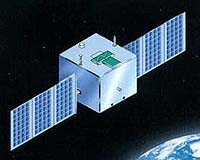
Beijing (XNA) Feb 19, 2009 China plans to launch a third ocean survey satellite in 2010 to upgrade its capacity for maritime weather forecasting and disaster relief, according to a report in the Science and Technology Daily on Wednesday. The newspaper is an official publication of the Ministry of Science and Technology. The satellite, Haiyang-2A, an ocean dynamic environmental satellite, will be used to monitor ocean wind fields, sea levels and temperatures, Jiang Xingwei, an official with the National Marine Environment Forecast Center, was quoted as saying. China plans to have a system consisting of ocean color remote sensing satellites, ocean dynamic environment satellites and ocean surveillance satellites. The color remote sensing satellites (Haiyang-1 series) use infrared remote sensing technology to monitor ocean pollution and topography in shallow waters. The dynamic environment satellites (Haiyang-2 series) use microwave remote sensing technology to monitor ocean wind fields and ocean surface temperatures. The ocean surveillance satellites (Haiyang-3 series) will have the combined features of the previous two series. China started to develop ocean dynamic environment satellite in2007, the newspaper said. China launched its first ocean survey satellite, Haiyang-1A, in May 2002. In April 2007, the second ocean survey satellite, Haiyang-1B, was launched. Both were ocean color remote sensing satellites.
Source: Xinhua News Agency Share This Article With Planet Earth
Related Links China Ministry of Science and Technology The Chinese Space Program - News, Policy and Technology China News from SinoDaily.com
 Satellite Collision Not To Delay China's Space Program
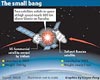 Beijing, China (XNA) Feb 14, 2009
The wreckage of US and Russian satellites that collided over Siberia poses a threat to China's satellites in orbit, but the country's space plan will proceed as scheduled. |
|
|

| The content herein, unless otherwise known to be public domain, are Copyright 1995-2007 - SpaceDaily.AFP and UPI Wire Stories are copyright Agence France-Presse and United Press International. ESA Portal Reports are copyright European Space Agency. All NASA sourced material is public domain. Additional copyrights may apply in whole or part to other bona fide parties. Advertising does not imply endorsement,agreement or approval of any opinions, statements or information provided by SpaceDaily on any Web page published or hosted by SpaceDaily. Privacy Statement |
 del.icio.us
 Digg
Digg Reddit
 YahooMyWeb
 Google
 Facebook