
 |
 |
 |
 |
 |
 |
 |
 |
 |

 |
China Sells Comsats To Nigeria, Venezuela and Pakistan
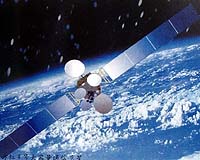
Hong Kong (UPI) April 9, 2009 China has sold three communications satellites to Nigeria, Venezuela and Pakistan that have military capabilities, a service life of 15 years and are equipped with C-band frequency and 18 channels of Ku-band frequency transmitters. The performance characteristics of all three of these satellites were basically the same, and all of them were to be launched by CZ-3B carrier rockets. However, the communications satellite for Nigeria stopped functioning less than one year after it went into operation when its solar array drive assembly failed. This posed a major challenge to the credibility of China-made communications satellites. Two weeks ago, China announced it would replace the Nigerian satellite in 2011 at no charge. The satellites were developed on the foundation of the domestic Dong Fang Hong IV communications satellite. Of course, all of them can be used for military communications as well as civilian purposes -- a matter of concern to the U.S. military. The United States had asked China not to assist Venezuela with its satellite project, but its request was ignored. The United States is concerned about China exporting military-use satellites and providing launch services to "rogue nations." The People's Republic of China's indifference to this U.S. concern can be seen as a tactic to exert pressure on the United States to halt its sales of advanced arms to Taiwan. China is now actively cultivating oil-producing nations as customers for its satellites and launch services. China's strategy has been effective so far, and its exports of military equipment have been boosted as a result. Nigeria and Venezuela are among the newest clients of Chinese-made military equipment. Nigeria has purchased a number of J-7 air-superiority combat fighters from China. In November, shortly after its satellite launch, Venezuela announced that it would purchase 18 K-8 trainers from China. Iran is another customer that China is pursuing for its satellite sales and launch services. In 2006 China provided a VSAT communications-satellite program to Iran's TA Co. valued at more than $500,000. This satellite network provided voice communications, data and video transmission service to the Iranian oil company, which is believed to have paid for the system with crude oil. Programs involving satellite technologies often involve huge sums of money, through which full-scale economic and trade relations can be expanded. Following its satellite launch for Nigeria, China won an $8.3 billion project to restructure Nigeria's railway network. However, after the communications satellite stopped functioning, Nigeria coldly declared it would suspend the contract with China. In Angola, when the Angola state television station upgraded to DStv satellite channels, China Electronics Import and Export Corp. provided an entire satellite TV program production and transmission center. Angola is China's second-largest source of imported oil. (Andrei Chang is editor in chief of Kanwa Defense Review Monthly, registered in Toronto. Jeff Chen is a reporter for the same magazine.) Share This Article With Planet Earth
Related Links The latest information about the Commercial Satellite Industry
 AAE Systems Commemorates 25th Anniversary
 Sunnyvale CA (SPX) Apr 08, 2009
This year, AAE Systems has reached a major milestone as it celebrates 25 years of innovation in delivering comprehensive satellite-based communications solutions to its international, multi-industry customer base. To commemorate its silver anniversary, it will release its lightweight mobile communications trailer (LMCT) system. |
|
|

| The content herein, unless otherwise known to be public domain, are Copyright 1995-2007 - SpaceDaily.AFP and UPI Wire Stories are copyright Agence France-Presse and United Press International. ESA Portal Reports are copyright European Space Agency. All NASA sourced material is public domain. Additional copyrights may apply in whole or part to other bona fide parties. Advertising does not imply endorsement,agreement or approval of any opinions, statements or information provided by SpaceDaily on any Web page published or hosted by SpaceDaily. Privacy Statement |
 del.icio.us
 Digg
Digg Reddit
 YahooMyWeb
 Google
 Facebook