
 |
 |
 |
 |
 |
 |
 |
 |
 |

 |
China To Offer Free Global Navigation By 2020
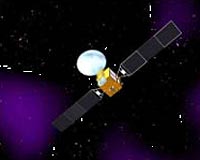
Beijing (XNA) Apr 20, 2009 China will be able to provide free global navigation and positioning services by 2020 with its own constellation of satellites named "Compass," an engineering expert said here Friday. Compass would cover all of China and its adjacent regions by the end of 2010 or early 2011, and it would expand into a global network by 2020, Cao Chong, chief engineer of the China Electronics Technology Group Corp., told Xinhua. Cao's statement contradicted earlier reports claiming that China would complete the system before 2015. Compass could provide civilian clients with positioning accuracy within 10 meters without charge, compared with the 5m to 6m offered by the U.S.-developed Global Positioning System (GPS), Cao said. However, "the Compass system has its own advantages," he said. The system would also be used to transmit text messages in remote or maritime areas largely beyond the reach of conventional satellites and provide "authorized services" for military purposes, Cao said. On Wednesday, China launched its second Compass navigation satellite, about two years after the first Compass module went into orbit. Cao said China would launch another 10 satellites within the next two years. The 12-satellite system could cover China and neighboring regions for the first phase of the Compass program. But it would take far more time to carry out the second phase, under which Compass would expand into a global network, he said. That would require at least 30 satellites. A military official, who would only give her surname as Tang, said the Compass system would eventually include 35 satellites. "The European Union's Galileo Positioning System cost more than3 billion Euros," Cao said. That amount is equivalent to 3.9 billion U.S. dollars). In light of that figure, "I think the Compass system might cost China several dozen billion yuan," Cao added. "The first phase alone could cost more than 10 billion yuan," Cao said. China is one of a few countries able to develop a navigation satellite system. By 2007, China had successfully put four experimental navigation satellites into orbit, forming the Beidou ("Big Dipper") system, which can provide positioning accuracy within 20m. The Beidou-based Compass system is expected to rival the U.S.-developed GPS, the EU's GPS and Russia's Global Navigation Satellite System, but Cao added: "It is hard to say which one is better for now."
Source: Xinhua News Agency Share This Article With Planet Earth
Related Links - GPS Applications, Technology and Suppliers
 DLR Receives Next-Generation GPS Signal For First Time
 Bonn, Germany (SPX) Apr 17, 2009
The Global Positioning System (GPS) is to be modernised and will provide a navigation service that is even more reliable and accurate in the future. On 24 March, a GPS satellite carrying a special test payload for transmitting a new navigation signal in the L5 frequency band was launched. |
|
|

| The content herein, unless otherwise known to be public domain, are Copyright 1995-2007 - SpaceDaily.AFP and UPI Wire Stories are copyright Agence France-Presse and United Press International. ESA Portal Reports are copyright European Space Agency. All NASA sourced material is public domain. Additional copyrights may apply in whole or part to other bona fide parties. Advertising does not imply endorsement,agreement or approval of any opinions, statements or information provided by SpaceDaily on any Web page published or hosted by SpaceDaily. Privacy Statement |
 del.icio.us
 Digg
Digg Reddit
 YahooMyWeb
 Google
 Facebook