
 |
 |
 |
 |
 |
 |
 |
 |
 |

 |
Climate Change Opens New Avenue For Spread Of Invasive Plants
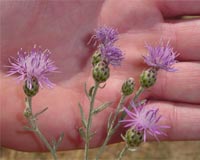
Gainesville FL (SPX) Nov 25, 2008 Plants that range northward because of climate change may be better at defending themselves against local enemies than native plants. So concludes a team of scientists including a University of Florida geneticist. The team's findings, reported in the online edition of Nature, suggest that certain plants could become invasive if they spread to places that were previously too cold for them. "This paper is the first to suggest that the mechanisms that aid invasive species when they move from one continent to the next may actually work within continents when climate change gradually extends the distributional range of a species," said Koen J.F. Verhoeven, an evolutionary biologist at The Netherlands Institute of Ecology. "Plants may be able to outrun, so to speak, their enemies from the southern range." Often, exotic plants and animals are introduced to new continents or geographic regions by travelers and commerce. Separation from their natural enemies can drive their invasive success in the new range. But, increasingly, the distribution of many species is shifting because of climate change and changes in land use. Led by scientists Tim Engelkes, Elly Morrien and Wim van der Putten of The Netherlands Institute of Ecology, with collaborators from the University of Florida, Wageningen University and Leiden University, the researchers compared exotic plant species that had recently established in Millingerwaard, a nature preserve in The Netherlands, with related native plant species from the same area. "We set out to see whether the native and exotics responded differently to natural enemies such as herbivores or microorganisms in the soil," said Lauren McIntyre, an associate professor of molecular genetics and microbiology in UF's College of Medicine and a member of the UF Genetics Institute. "UF helped develop a statistical model that took into account the experimental design and had good power to detect the effects of herbivory." Scientists grew six exotic and nine native plant species in pots with field-collected soil from the Millingerwaard area, allowing natural soil pathogenic microbes to accumulate in the pots. Then they removed the plants and replanted the soils with the same plant species. The growth of native plants was reduced far more than the growth of exotic species, indicating natives were more vulnerable to natural soil-borne microbes. In addition, all plant species were exposed to North African locusts and a widespread species of aphid. These herbivores were not expected to show a preference for either the native or the exotic species. But they preferred the native plants and left the exotic ones relatively alone. Researchers say the findings help to better assess the ecological consequences of climate change. The success of exotic plants expanding their range in response to warmer climates may be comparable to invasive exotic plant species that arrive from other continents, representing an additional threat to biodiversity. Share This Article With Planet Earth
Related Links University of Florida Darwin Today At TerraDaily.com
 Life At The Boundaries
 Moffett Field CA (SPX) Nov 21, 2008
Scientists have long known that life can exist in some very extreme environments. But Earth continues to surprise us. |
|
|

| The content herein, unless otherwise known to be public domain, are Copyright 1995-2007 - SpaceDaily.AFP and UPI Wire Stories are copyright Agence France-Presse and United Press International. ESA Portal Reports are copyright European Space Agency. All NASA sourced material is public domain. Additional copyrights may apply in whole or part to other bona fide parties. Advertising does not imply endorsement,agreement or approval of any opinions, statements or information provided by SpaceDaily on any Web page published or hosted by SpaceDaily. Privacy Statement |
 del.icio.us
 Digg
Digg Reddit
 YahooMyWeb
 Google
 Facebook