
 |
 |
 |
 |
 |
 |
 |
 |
 |

 |
Culture shock: Getting a Chinese driver's licence
Beijing (AFP) Feb 9, 2009 If someone's intestines are protruding from an open abdominal wound, should you: A. Put them back in place; B. Do nothing; or, C. Cover them with some kind of container and fasten it around the body? The above is not from a first-year medical school exam, but is one of the 100 questions that locals and foreigners alike could find on China's written driver's licence exam. (The answer, by the way, is C.) Test candidates are given a booklet of 800 test questions, 100 of which appear on the actual exam. While the questions dealing with traffic signs are universally understood, others have singularly Chinese characteristics. Sometimes two of the three answers could be equally right, or the answer that is considered right is obviously false. Take the following example. "What should a driver do when he needs to spit while driving? A. Spit through the window. B. Spit into a piece of waste paper, then put it into a garbage can. C. Spit on the floor of the vehicle." Answer? B. On one recent morning, a group of Americans, Russians, South Koreans and French nationals waited for the test at the Beijing Traffic Management Bureau, in a room reserved for foreigners behind the toilets. A series of gory images flashed across a flat-screen television: a badly injured person lying in a car's back seat, covered in blood; a dazed driver sitting on the ground after an accident; mourning relatives in tears. Nikita, a Russian who works for an aviation company in the Chinese capital, was the most confident person in the group, after spending four days revising the multiple-choice questionnaire. Nothing could go wrong -- so he thought. The 20 or so examinees took their seats, each facing a computer screen. The test began. They had to write their ID numbers, pick a language, and click their way through the computerised test: A, B, or C. True or False. Yes or No. All 100 questions had be completed in 45 minutes, with a candidate needing 90 or more correct to pass. Results were given immediately. A group of US embassy staffers left the room, mostly in a jubilant mood -- all had passed except for one man, who only got 82 percent correct. "We spent the entire weekend cramming," one of them said. A woman tried to console the candidate who had failed. "It would've been an even bigger pity if you had scored 89," she said. Nikita, for his part, was utterly devastated. Despite all of his hard work, he only answered 45 questions correctly. "I couldn't understand a word of the Russian used on the test," he said. Once the written test is over, foreigners who have a driver's license in their home country are not required to take a practical test, unlike the Chinese. But they do have to have their eyesight checked, and this seemingly simple exercise also holds its fair share of surprises. At a nearby hospital, a nurse asked the latest candidates to read letters from a lighted panel, covering the left and the right eye in turn. But they have to read the panel in a mirror. And the letters listed do not exist in any known alphabet. A backwards E? One that is upside down? How do you pronounce that? Somehow, the candidates passed the sight test, and most left the traffic management office a short time later with licences in hand. But reality will soon set in. At the entrance to the parking lot were two cars crumpled like accordions, and on the streets of Beijing, no one seems to pay attention to the rules of the road. Drivers routinely overtake on the right, taxis breeze through red lights, cyclists ride against the traffic and pedestrians jaywalk. Last year alone, 73,500 people were killed and 304,000 injured in traffic accidents in China. Welcome to China's roads, among the most dangerous in the world. Share This Article With Planet Earth
Related Links Car Technology at SpaceMart.com
 Tesla shifts electric sedan site to win US government loan
 San Francisco (AFP) Jan 30, 2009
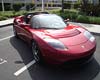
Tesla has scrapped plans to build an electric car plant in Silicon Valley, saying Friday that it will opt for an abandoned factory elsewhere in order to win a low-cost federal loan. |
|
|

| The content herein, unless otherwise known to be public domain, are Copyright 1995-2007 - SpaceDaily.AFP and UPI Wire Stories are copyright Agence France-Presse and United Press International. ESA Portal Reports are copyright European Space Agency. All NASA sourced material is public domain. Additional copyrights may apply in whole or part to other bona fide parties. Advertising does not imply endorsement,agreement or approval of any opinions, statements or information provided by SpaceDaily on any Web page published or hosted by SpaceDaily. Privacy Statement |
 del.icio.us
 Digg
Digg Reddit
 YahooMyWeb
 Google
 Facebook