
 |
 |
 |
 |
 |
 |
 |
 |
 |

 |
Cyclones Spurt Water Into The Stratosphere And Feed Global Warming
Cambridge MA (SPX) Apr 22, 2009 Scientists at Harvard University have found that tropical cyclones readily inject ice far into the stratosphere, possibly feeding global warming. The finding, published in Geophysical Research Letters, provides more evidence of the intertwining of severe weather and global warming by demonstrating a mechanism by which storms could drive climate change. Many scientists now believe that global warming, in turn, is likely to increase the severity of tropical cyclones. "Since water vapor is an important greenhouse gas, an increase of water vapor in the stratosphere would warm the Earth's surface," says David M. Romps, a research associate in Harvard's Department of Earth and Planetary Science. "Our finding that tropical cyclones are responsible for many of the clouds in the stratosphere opens up the possibility that these storms could affect global climate, in addition to the oft-mentioned possibility of climate change affecting the frequency and intensity of tropical cyclones." Romps and co-author Zhiming Kuang, assistant professor of climate science in Harvard's Faculty of Arts and Sciences, were intrigued by earlier data suggesting that the amount of water vapor in the stratosphere has grown by roughly 50 percent over the past 50 years. Scientists are currently unsure why this increase has occurred; the Harvard researchers sought to examine the possibility that tropical cyclones might have contributed by sending a large fraction of their clouds into the stratosphere. Using infrared satellite data gathered from 1983 to 2006, Romps and Kuang analyzed towering cloud tops associated with thousands of tropical cyclones, many of them near the Philippines, Mexico, and Central America. Their analysis demonstrated that in a cyclone, narrow plumes of miles-tall storm clouds can rise so explosively through the atmosphere that they often push into the stratosphere. Romps and Kuang found that tropical cyclones are twice as likely as other storms to punch into the normally cloud-free stratosphere, and four times as likely to inject ice deep into the stratosphere. "It is ... widely believed that global warming will lead to changes in the frequency and intensity of tropical cyclones," Romps and Kuang write in Geophysical Research Letters. "Therefore, the results presented here establish the possibility for a feedback between tropical cyclones and global climate." Typically, very little water is allowed passage through the stratosphere's lower boundary, known as the tropopause. Located some 6 to 11 miles above the Earth's surface, the tropopause is the coldest part of the Earth's atmosphere, making it a barrier to the lifting of water vapor into the stratosphere: As air passes slowly through the tropopause, it gets so cold that most of its water vapor freezes out and falls away. But if very deep clouds, such as those in a tropical cyclone that can rise through the atmosphere at speeds of up to 40 miles per hour, can punch through the tropopause too quickly for this to happen, they can deposit their ice in the warmer overlying stratosphere, where it then evaporates. "This suggests that tropical cyclones could play an important role in setting the humidity of the stratosphere," Romps and Kuang write. Share This Article With Planet Earth
Related Links Harvard University Bringing Order To A World Of Disasters When the Earth Quakes A world of storm and tempest
 NASA Experiment Stirs Up Hope For Forecasting Deadliest Cyclones
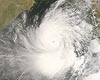 Greenbelt MD (SPX) Apr 20, 2009
NASA satellite data and a new modeling approach could improve weather forecasting and save more lives when future cyclones develop. About 15 percent of the world's tropical cyclones occur in the northern Indian Ocean, but because of high population densities along low-lying coastlines, the storms have caused nearly 80 percent of cyclone-related deaths around the world. |
|
|

| The content herein, unless otherwise known to be public domain, are Copyright 1995-2007 - SpaceDaily.AFP and UPI Wire Stories are copyright Agence France-Presse and United Press International. ESA Portal Reports are copyright European Space Agency. All NASA sourced material is public domain. Additional copyrights may apply in whole or part to other bona fide parties. Advertising does not imply endorsement,agreement or approval of any opinions, statements or information provided by SpaceDaily on any Web page published or hosted by SpaceDaily. Privacy Statement |
 del.icio.us
 Digg
Digg Reddit
 YahooMyWeb
 Google
 Facebook