
 |
 |
 |
 |
 |
 |
 |
 |
 |

 |
Czechs don't expect US to scrap missile shield plans
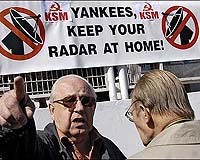
Brussels (AFP) April 2, 2009 Czech Deputy Premier Alexandr Vondra said Thursday he is not expecting the US to scrap its missile shield plans in Europe, despite President Barack Obama's decision to review the scheme which Moscow opposes. "I don't expect it will be scrapped," Vondra said in an interview with AFP, adding that "It's up to the Americans to say what their ideas are." Prague and Washington last year signed two deals for the installment of a missile radar southwest of Prague as part of the controversial US missile shield scheme. Former president George W. Bush launched the plans to extend the US missile shield into Europe, basing 10 interceptors in Poland linked to a radar in the Czech Republic to counter any threat from "rogue states," primarily Iran. But Obama's administration has begun a review of the project's costs and technical feasibility, a move which has eased fears in Russia that the shield was aimed at it. "It's logical that a new administration coming to power wants to make a review of all important things and that's an important thing. I expect the first results of this review to be presented some time later this year," said Vondra. However while not expecting the project to be scrapped, the Czech deputy prime minister did admit there could be delays and modifications. "There is the question about the speed, there is the question about some adjustments," he said. One reason not to rush could be "the question of the maturity of the threats" from Iran, but it does not mean that we're going to scrap." Officially, Russian diplomats have downplayed US and Israeli fears that Iran is on the verge of building an atomic weapon, while Moscow has resisted calls for tougher sanctions on Tehran for its disputed nuclear programme. However a Russian strategic arms expert said earlier this month that Iran could produce an atomic weapon in "one or two years". Obama's administration has already made some rapprochement towards Tehran. The US held its first direct contact with Iran Tuesday at a conference on Afghanistan where America and its old foe found common cause on rebuilding the war-torn state. The Czech government, which holds the rotating EU presidency, will host Obama at an EU-US summit in Prague on Sunday. There it will hope to persuade him of the shield's usefulness despite public opposition to the project. "There are some threats, so we should work together to see how to guarantee the protection of all allies if the threats persist," Vondra said. "Iran certainly, if you measure this by its nuclear programme as well as the ballistic missile programme, belongs to the most serious threats." Share This Article With Planet Earth
Related Links Learn about missile defense at SpaceWar.com Learn about nuclear weapons doctrine and defense at SpaceWar.com All about missiles at SpaceWar.com Learn about the Superpowers of the 21st Century at SpaceWar.com
 Israeli Very-Short-Range Anti-Ballistic Missile Interceptor System Fails Part Four
 Washington (UPI) Mar 31, 2009
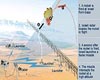
 Why has Israel's very-short-range Iron Dome anti-ballistic missile interceptor system failed so badly? And why didn't the Israelis simply buy the already combat-approved, highly reliable U.S.-built Raytheon Vulcan Phalanx machine gun instead? |
|
|

| The content herein, unless otherwise known to be public domain, are Copyright 1995-2007 - SpaceDaily.AFP and UPI Wire Stories are copyright Agence France-Presse and United Press International. ESA Portal Reports are copyright European Space Agency. All NASA sourced material is public domain. Additional copyrights may apply in whole or part to other bona fide parties. Advertising does not imply endorsement,agreement or approval of any opinions, statements or information provided by SpaceDaily on any Web page published or hosted by SpaceDaily. Privacy Statement |
 del.icio.us
 Digg
Digg Reddit
 YahooMyWeb
 Google
 Facebook