
 |
 |
 |
 |
 |
 |
 |
 |
 |

 |
Does Missile Defense Discourage Nuclear Proliferation Part 14
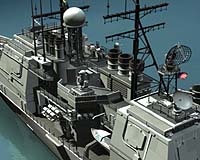
Washington (UPI) Feb 18, 2009 The absence of effective defenses against small attacks employing ballistic missiles increases the incentives for additional countries to acquire such weapons. Thus, a strong case can be made that building modest missile defenses for the United States strengthens deterrence and discourages nuclear proliferation. However, that is only true when the defenses are actually capable of destroying attacking missiles, and boost-phase systems are more likely to achieve that goal. At the very least, they reduce the challenge faced by other defenders by thinning out an attack before each missile becomes a cloud of warheads, decoys, countermeasures and debris. The new administration of U.S. President Barack Obama can keep the growing technological promise of ballistic missile defense alive for a small amount of money. The resources required to sustain all of the boost-phase interception concepts currently funded by the Missile Defense Agency are much less than the federal government spends each day. In round numbers it is $3 billion to $4 billion per year, which is not much money compared with the consequences of even one nuclear weapon reaching American soil. The three programs pursued by the Bush administration over the past eight years that offer the most potential for effective boost-phase or ascent-phase interception of ballistic missiles are: -- The Kinetic Energy Interceptor. -- The Airborne Laser. -- The Network Centric Airborne Defense Element. Other programs could also potentially be applied to boost-phase interception, such as the U.S. Navy's sea-based Standard Missile-3 defense system based on Aegis warships and the Air Launched Hit-to-Kill effort of the U.S. Air Force. However, these latter programs are dependent on favorable geographical and threat circumstances to succeed against ballistic missiles in the earliest and most vulnerable phase of their flight. The Kinetic Energy Interceptor, the Airborne Laser and the Network Centric Airborne Defense Element are more flexible, employable options in a wide range of circumstances. Therefore, they are the most important boost-phase concepts to keep on track. The targeting mechanism of the Airborne Laser is emblematic of the advanced technology developed by the military to intercept ballistic missiles over long distances. In order for the chemical laser to successfully destroy incoming missiles, it must dwell on a fast-moving target from hundreds of miles away while compensating for any turbulence in the intervening atmosphere. The U.S. Navy's Aegis combat system, carried on naval surface combatants, is being adapted for midcourse interception of ballistic missiles, and in some cases might be used for boost-phase interception, too. The United States currently plans to deploy a layered defensive architecture in which weapons like the Airborne Laser would thin out threats before they were engaged later in their trajectory by systems such as the Aegis. (Loren B. Thompson is chief executive officer of the Lexington Institute, an Arlington, Va.-based think tank that supports democracy and the free market.) (United Press International's "Outside View" commentaries are written by outside contributors who specialize in a variety of important issues. The views expressed do not necessarily reflect those of United Press International. In the interests of creating an open forum, original submissions are invited.) Share This Article With Planet Earth
Related Links Learn about missile defense at SpaceWar.com Learn about nuclear weapons doctrine and defense at SpaceWar.com All about missiles at SpaceWar.com Learn about the Superpowers of the 21st Century at SpaceWar.com
 Raytheon's JLENS Passes Key Milestone
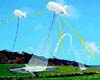 Tewksbury MA (SPX) Feb 17, 2009
Raytheon Company's JLENS (Joint Land Attack Cruise Missile Defense Elevated Netted Sensor System) has successfully conducted a critical design review representing a key milestone in the U.S. Army program to provide cruise missile defense capability for U.S. warfighters. |
|
|

| The content herein, unless otherwise known to be public domain, are Copyright 1995-2007 - SpaceDaily.AFP and UPI Wire Stories are copyright Agence France-Presse and United Press International. ESA Portal Reports are copyright European Space Agency. All NASA sourced material is public domain. Additional copyrights may apply in whole or part to other bona fide parties. Advertising does not imply endorsement,agreement or approval of any opinions, statements or information provided by SpaceDaily on any Web page published or hosted by SpaceDaily. Privacy Statement |
 del.icio.us
 Digg
Digg Reddit
 YahooMyWeb
 Google
 Facebook