
 |
 |
 |
 |
 |
 |
 |
 |
 |

 |

Brussels (AFP) March 25, 2011 European leaders resolved Friday to revisit safety at nuclear reactors as emergency workers in Japan suffered radiation burns and rising global fears of food contamination hit home. New checks are to be delegated to an inter-governmental European Nuclear Safety Regulatory Group (ENSRG), which will meet on Monday. French President Nicolas Sarkozy, whose country has the lion's share of the industry in Europe with 58 reactors (34 of which are more than 30 years old), said if a plant fails so-called 'stress tests,' it will shut forever. "If a reactor does not pass the test, it will be closed," he told a news conference following a two-day European Union summit preoccupied with the Libya campaign and Portuguese debt woes. German Chancellor Angela Merkel, British Prime Minister David Cameron and Spanish premier Jose Luis Rodriguez Zapatero also spoke of the need to double-check all nuclear power-plant security. "It's not enough to do it at the national level," said Merkel, whose government has already shut nine of its 17 reactors. "We also have to do it on a European and obviously international scale," she underlined. Merkel, though, was given a gentle telling off back home by the doyen of German politics, former chancellor Helmut Kohl, 80. "The catastrophe in Japan has not made nuclear power in Germany any more dangerous that it was before," he wrote in the mass-market Bild. Cameron said leaders had achieved a "good concensus on what needed to be done," while Zapatero also said it was "logical" that sites failing inspections should close. The decision followed vigorous arguments among national capitals this week over how to proceed towards so-called 'stress tests' on 143 existing nuclear plants, as well as future builds. Europe is still traumatised by the Chernobyl nuclear accident in today's Ukraine back in 1986. Luxembourg Prime Minister Jean-Claude Juncker said the EU must make certain that experts drawing up proposals for next month "must not be (too closely) linked to the nuclear lobby." The stakes are high: 24 new reactors are planned in the EU, although enthusiasm outside France has dimmed since the radiation leakage at the Fukushima plant following Japan's earthquake and tsunami. Diplomats told AFP that Rome complained that "emotional" announcements from Berlin had "complicated" a June 12 referendum in Italy on plans to start building nuclear power stations there from 2014. The Italian government on Wednesday declared a one-year moratorium on those plans. Austria had demanded obligatory tests, and others failed in a bid to have like-for-like testing regimes introduced into accession negotiations -- a reference to new installations in EU-candidate Turkey, ministers' principal concern alongside Belarus and Russia. Europe imposed emergency tests on imports of Japanese food Thursday over fears of radiation contamination, with physical checks in labs ordered before products enter the food chain.
Share This Article With Planet Earth
Related Links Space Technology News - Applications and Research

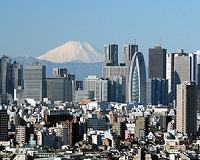 Tokyo water unsafe for babies, food bans imposed
Tokyo (AFP) March 24, 2011 Tokyo warned Wednesday that radioactive iodine over twice the safe level for infants had been detected in its tap water after Japan's massive earthquake crippled a nuclear plant. The revelation came after the United States barred imports of dairy and other produce from areas near the Fukushima power station, and as the Chinese territory of Hong Kong became the first Asian economy to follow s ... read more |
|
|
| The content herein, unless otherwise known to be public domain, are Copyright 1995-2010 - SpaceDaily. AFP and UPI Wire Stories are copyright Agence France-Presse and United Press International. ESA Portal Reports are copyright European Space Agency. All NASA sourced material is public domain. Additional copyrights may apply in whole or part to other bona fide parties. Advertising does not imply endorsement,agreement or approval of any opinions, statements or information provided by SpaceDaily on any Web page published or hosted by SpaceDaily. Privacy Statement |


 del.icio.us
 Digg
Digg Reddit
 YahooMyWeb
 Google
 Facebook


