
 |
 |
 |
 |
 |
 |
 |
 |
 |

 |
Eliminating Space Debris
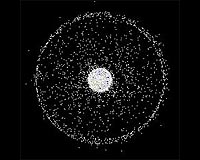
Bethesda MD (SPX) Nov 18, 2008 There is so much space debris in low orbits around the Earth, we wish Chicken Little were right about the sky falling-at least when it comes to debris that is cluttering up our space environment and starting to truly interfere with use of space. This man-made debris is clogging up active satellite traffic lanes and the situation is getting worse. As we approach space gridlock, space will eventually become inaccessible to all nations for all applications. If we choose to do nothing, there will eventually be no more GPS navigation, no more weather data beamed from space and no more satellite television. And, unfortunately, no one is doing anything about cleaning up space! This year has been a tough one for many segments of the population. So, let's do at least one thing that will help our future-generate ideas on how to clean up space. Launchspace put out the Call for Action! Action was what we got through your many responses! Launchspace thanks all those who sent us ideas. We appreciate your time and input. Most of the suggestions had merit and some were pretty innovative. We will not judge the entries nor can we quantitatively score them. Moreover, since Launchspace is not a funding agency, please do not send us detailed proposals seeking funding. In addition to the many basic ideas submitted to Launchspace, there were well devised descriptions of concepts and even a few papers from people at organizations such as Aerojet, Aerospace Corporation, NASA, Lockheed Martin and the Applied Physics Lab of Johns Hopkins University, among many others. We got responses from throughout the U.S. and from other countries including the United Kingdom and New Zealand. The suggestions fall into two main categories: - limiting new debris through such means as de-orbiting mechanisms integrated into the design of future satellites and - eliminating existing space debris It is exciting and positive that there is so much interest out there in solving this problem. It is critical to our future here on Earth and in space. In the next couple of weeks, Launchspace will publish a series of short articles summarizing your concepts. We will provide a brief analysis of the recommendations, tell you what seems plausible and why, and again get your input! Together, we can raise awareness hopefully leading to positive action on this crucial issue. Share This Article With Planet Earth
Related Links Launchspace Space Technology News - Applications and Research
 Traffic Management In Outer Space
 Superior CO (SPX) Nov 10, 2008
Outer space is a busy thoroughfare of satellites operated by numbers of nations. Earth orbits are crowded with active spacecraft, as well as dead or dying satellites - and countless bits of hazardous space debris. |
|
|

| The content herein, unless otherwise known to be public domain, are Copyright 1995-2007 - SpaceDaily.AFP and UPI Wire Stories are copyright Agence France-Presse and United Press International. ESA Portal Reports are copyright European Space Agency. All NASA sourced material is public domain. Additional copyrights may apply in whole or part to other bona fide parties. Advertising does not imply endorsement,agreement or approval of any opinions, statements or information provided by SpaceDaily on any Web page published or hosted by SpaceDaily. Privacy Statement |
 del.icio.us
 Digg
Digg Reddit
 YahooMyWeb
 Google
 Facebook