
 |
 |
 |
 |
 |
 |
 |
 |
 |

 |

Austin TX (SPX) Nov 22, 2010 After seven years of work by over 150 students on a shoestring budget, the FASTRAC team will experience the ultimate gratification of any aerospace engineer: seeing the fruits of their labor launch into space. FASTRAC, which stands for Formation Autonomy Spacecraft with Thrust, Relnav, Attitude and Crosslink, is a pair of nanosatellites conceived, designed and built completely by aerospace graduate and undergraduate students. The program, sponsored by the Air Force Research Laboratory, began in 2003 with the goal of developing space technology that's more affordable and therefore more accessible, as well as training and educating future engineers. With a hardware budget of about $250,000, a drop in the bucket compared to the millions typically spent on spacecraft missions, students built two small satellites, each about the size of two car tires, which will launch from Kodiak Launch Complex in Alaska with the ability to separate from one another and then establish communication with each other to exchange information on location and attitude determination. "This is a precursor to cooperative satellites," said Dr. Glenn Lightsey, the FASTRAC faculty adviser. "It's very progressive, forward-looking technology that the Air Force and NASA are very interested in because instead of having single humongous satellites that do everything, you can have smaller satellites that are more effective as a group than a single more expensive satellite." Project manager Sebastian Munoz said this launch will demonstrate that the technology they built is functional and valuable for application. "After we launch, that's the interesting part of the project because we get to operate it from the ground station and collect the data from the different sensors to determine if the technology works or not," Munoz said. The satellites will make their first pass over Austin the following morning, November 20, at 6:30 a.m., and the FASTRAC team will be ready. "We'll be anxiously waiting to communicate with our satellite to make sure everything checks out and everything's working," he said. Lightsey said the big idea with the project is to get satellites working together and sharing information - a technological innovation in itself for such small satellites - but equally remarkable is that students ran this project on such a limited budget. "That's just as innovative as developing the technology that's never been done before," he said. "If you can do technology for a fraction of the cost, then you're doing another innovation." And the students over the past seven years have consistently risen to the challenge, despite challenges like losing one third of their work force to graduation each year. "It's really convinced me that UT is a great school and that we have great students," Lightsey said. "If you give them an opportunity, they're really going to make the most of it." He said the program also introduces students to field experience in a way no classroom can. "It's a great opportunity to get a look at what it feels like to be in an aerospace company and government agency, from design to building and testing it to seeing it launch in space," he said. "As an aerospace engineer, that's what we live for, to see our stuff go into space."
Share This Article With Planet Earth
Related Links University of Texas at Austin Space Technology News - Applications and Research

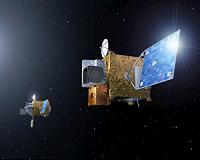 Development Of Meteosat Third Generation To Start
Paris, France (ESA) Nov 19, 2010 Marking a significant milestone for Europe's next fleet of meteorological satellites, ESA has given the go-ahead to Thales Alenia Space in France to start work on developing the Meteosat Third Generation. The 'Preliminary Authorisation To Proceed' was signed after a kick-off meeting between ESA and Thales Alenia Space. This approval follows several months of negotiations that has resulted ... read more |
|
|
| The content herein, unless otherwise known to be public domain, are Copyright 1995-2010 - SpaceDaily. AFP and UPI Wire Stories are copyright Agence France-Presse and United Press International. ESA Portal Reports are copyright European Space Agency. All NASA sourced material is public domain. Additional copyrights may apply in whole or part to other bona fide parties. Advertising does not imply endorsement,agreement or approval of any opinions, statements or information provided by SpaceDaily on any Web page published or hosted by SpaceDaily. Privacy Statement |


 del.icio.us
 Digg
Digg Reddit
 YahooMyWeb
 Google
 Facebook


