|
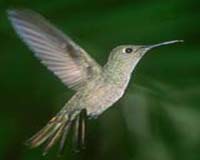
Flapping-wing airplanes are envisioned
Ann Arbor, Mich. (UPI) Feb 5, 2008 U.S. scientists are studying birds, bats and insects and their aerobatic efficiencies as a step toward designing flapping-wing airplanes. University of Michigan engineers said such planes of the future might have wingspans smaller than a deck of playing cards and the aerodynamics of flying animals that can outperform current man-made aircraft. For example, the engineers note the roll rate of the aerobatic A-4 Skyhawk plane is about 720 degrees per second. The roll rate of a barn swallow exceeds 5,000 degrees per second. "Natural flyers obviously have some highly varied mechanical properties that we really have not incorporated in engineering," said Wei Shyy, chairman of the university's Aerospace Engineering department. "They're not only lighter but also have much more adaptive structures as well as capabilities of integrating aerodynamics with wing and body shapes, which change all the time." Shyy and colleagues have grants from the U.S. Air Force totaling more than $1 million a year to research small flapping wing aircraft. Shyy's current focus is on the aerodynamics of flexible wings related to micro air vehicles with wingspans of 1-3 inches. Community Email This Article Comment On This Article Related Links Aerospace News at SpaceMart.com
 British-designed jet could reach Australia in under five hours
 London (AFP) Feb 5, 2008
British engineers unveiled plans Tuesday for a hypersonic jet which could fly from Europe to Australia in less than five hours. |
|
|
| The content herein, unless otherwise known to be public domain, are Copyright Space.TV Corporation. AFP and UPI Wire Stories are copyright Agence France-Presse and United Press International. ESA Portal Reports are copyright European Space Agency. All NASA sourced material is public domain. Additional copyrights may apply in whole or part to other bona fide parties. Advertising does not imply endorsement, agreement or approval of any opinions, statements or information provided by Space.TV Corp on any Web page published or hosted by Space.TV Corp. Privacy Statement |