|
 |
 |
 |
 |
 |
 |
 |
 |

 |
Fluor Contracts For World's Largest Polysilicon Plant
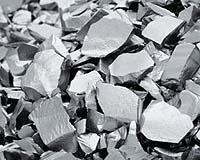
Irving TX (SPX) Apr 16, 2008 Fluor has announced that it was awarded a contract for engineering, procurement and construction management (EPCM) services by LDK Solar for the world's largest new polysilicon facility in Xinyu City, Jiangxi, People's Republic of China. Fluor originally booked the front-end engineering and design (FEED) work for this project in the third quarter of 2007. Fluor booked the remainder of the $1 billion project in the first quarter of 2008. Fluor's scope of work includes full EPCM services using a design-build approach, which also includes the trichlorosilane plant, chemical vapor deposition reactors, converters, and associated utilities, offsites and infrastructure. The new facility will be located adjacent to LDK Solar's existing solar wafer manufacturing facilities at its Xinyu City headquarters. "Fluor and LDK Solar are dedicated to bringing this fast-track project online to meet the increasing worldwide demand for polysilicon-based renewable energy sources," said David Seaton, president of Fluor's Energy and Chemicals Group. "With the increasing importance of the China market for Fluor's energy and chemicals clients, we expect this world-class, state-of-the-art polysilicon facility to set the stage to meet this growing demand." Fluor's Greenville, S.C.; Manila, Philippines, and Shanghai operations are performing FEED, detailed design and procurement, with the construction management team located in Xinyu City. Fluor is currently working on numerous polysilicon projects around the world and is the leader in providing engineering, procurement and construction services in this growing industry. "We are pleased that Fluor will work with us to achieve high-quality construction management standards during this significant endeavor. Our partnership with a leading EPCM service provider reiterates our commitment to remaining on schedule and within budget in completing this polysilicon plant," said Xiaofeng Peng, chairman and chief executive officer, LDK Solar. When the project is completed, it is expected to produce up to 15,000 metric tons per year of polysilicon and 90,000 metric tons per year of trichlorosilane. To date, the entire worldwide production of polysilicon is about 100,000 metric tons per year. Construction at the site began in August 2007, with the mechanical completion of the first manufacturing line expected to be December 31, 2008. All three lines are scheduled to be completed by July 2009. The number of construction craft labor is expected to peak to as many as 8,000 workers. The design and construction of the polysilicon plant will incorporate world-class recognized environmentally-friendly standards including the implementation of state-of-the-art western recycling technology. LDK Solar Co., Ltd., is a leading manufacturer of multicrystalline solar wafers, which is the principal material used to produce solar cells. LDK Solar sells multicrystalline wafers globally to manufacturers of photovoltaic products, including solar cells and solar modules. In addition, the company provides wafer-processing services to monocrystalline and multicrystalline solar cell and module manufacturers. Community Email This Article Comment On This Article Related Links Fluor Corporation All About Solar Energy at SolarDaily.com
 Berkeley Lab Examines State-level Renewables Portfolio Standards Policies
 Berkeley CA (SPX) Apr 15, 2008
Renewable electricity is being supported by a growing number of states through the creation of renewables portfolio standards (RPS). A report released by the U.S. Department of Energy's Lawrence Berkeley National Laboratory (Berkeley Lab) provides a comprehensive overview of the early experiences with these state-level RPS policies. |
|
|
| The content herein, unless otherwise known to be public domain, are Copyright Space.TV Corporation. AFP and UPI Wire Stories are copyright Agence France-Presse and United Press International. ESA Portal Reports are copyright European Space Agency. All NASA sourced material is public domain. Additional copyrights may apply in whole or part to other bona fide parties. Advertising does not imply endorsement, agreement or approval of any opinions, statements or information provided by Space.TV Corp on any Web page published or hosted by Space.TV Corp. Privacy Statement |