
 |
 |
 |
 |
 |
 |
 |
 |
 |

 |

Davis CA (SPX) May 18, 2011 River flow fluctuations downstream of dams are often out of sync with natural flow patterns and can have significant negative effects on aquatic species, such as native frogs, according to a team of scientists from the USDA Forest Service's Pacific Southwest Research Station, the University of California, Davis and the University of California, Berkeley. The team examined how altered water flows caused by hydroelectric dams impact the life cycle of the foothill yellow-legged frog (Rana boylii). The frog, which lives in foothill regions from southern California to southern Oregon, completes its life cycle exclusively in riverine environments. The species is well-adapted to predictable flow patterns that are high during the spring run-off period and low during the summer. Changes to these patterns affect the survival of eggs and tadpoles and consequently are likely to be a primary factor in limiting populations of this declining species, scientists say. Findings from three recent research projects are published in Copeia, River Research and Applications, and Conservation Genetics. These studies revealed that R. boylii tadpoles are not strong swimmers and do not survive the high flow events that can occur during the summer months in many dammed rivers, leading to local population declines. The team tested a habitat modeling tool that is commonly used for fish, with eggs and tadpole data from R. boylii, and found that it could provide reliable predictions of habitat changes under different flow scenarios. Genetic research conducted by the team identified several isolated and unique populations at the extremes of the geographic range and also demonstrated the important role of river basins in defining relationships among populations. The combined results of this work can guide conservation planning for the species. Managing water discharge from hydroelectric dams to mirror the environment's natural flow is ideal, but this approach may not meet the needs of human consumption and energy demands. "To conserve riverine species, one solution may be to restore some of the key characteristics of natural flow patterns, especially the timing of high and low flow periods," says Amy Lind, wildlife biologist at the Pacific Southwest Research Station in Davis, Calif., and co-author of three recent papers on R. boylii ecology and genetics. For more information about this research, go to a recently developed website focused on this species at: The team's three research papers can be found here, here and here.
Share This Article With Planet Earth
Related Links Foothill yellow-legged frog USDA Forest Service, Pacific Southwest Research Station Water News - Science, Technology and Politics

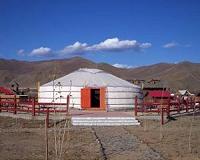 Water for Mongolia
Darkan, Mongolia (SPX) May 16, 2011 Mongolia is a country of contrasts - in summer boiling hot, in winter freezing cold; in the north damp, in the south bone dry. One million of its three million inhabitants live tightly packed together in the capital Ulaanbaatar, while the rest of the huge country is largely populated by nomads and their cattle. Providing a clean supply of drinking water across the entire country is a diffi ... read more |
|
|
| The content herein, unless otherwise known to be public domain, are Copyright 1995-2010 - SpaceDaily. AFP and UPI Wire Stories are copyright Agence France-Presse and United Press International. ESA Portal Reports are copyright European Space Agency. All NASA sourced material is public domain. Additional copyrights may apply in whole or part to other bona fide parties. Advertising does not imply endorsement,agreement or approval of any opinions, statements or information provided by SpaceDaily on any Web page published or hosted by SpaceDaily. Privacy Statement |


 del.icio.us
 Digg
Digg Reddit
 YahooMyWeb
 Google
 Facebook


