
 |
 |
 |
 |
 |
 |
 |
 |
 |

 |
G/ATOR Critical Design Review Completed
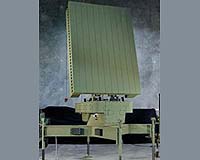
Baltimore MD (SPX) Apr 28, 2009 The U.S. Marine Corps' Ground/Air Task Oriented Radar (G/ATOR) program passed a key milestone with the successful conclusion of its formal Critical Design Review (CDR) at Northrop Grumman's Electronic Systems sector headquarters. "Radar technology represents the next generation of critical air and ground warfighting capabilities for Marine Corps and Joint Force Commanders," said John Burrow, G/ATOR's Technical Authority and Marine Corps Systems Command's Executive Director, who chaired the CDR proceedings. The CDR involved an extensive U.S. government review to verify that the G/ATOR system design and development are proceeding as scheduled, that the G/ATOR detailed hardware and software designs are mature, and that the G/ATOR design meets U.S. Marine Corps requirements. The CDR was attended by more than 60 Marine Corps, Navy, Army and U.S. Department of Defense personnel as well as civilian subject-matter experts. The CDR included an independent panel of five senior radar engineers from the Navy, Army and a Federally Funded Research and Development Corporation. During the CDR, it was noted that an informal strategic alliance with other Navy programs was established shortly after contract award that enabled G/ATOR to successfully leverage from the Navy's development efforts to further the Marine Corps' own design and development. It was also noted that engineering teams from the Marine Corps and Northrop Grumman were able to leverage the open software design of the Navy's AN/SPQ-9B radar system's tracker and the open computing architecture of the G/ATOR system, to successfully incorporate sophisticated tracking software into the G/ATOR program in less than three weeks. Northrop Grumman is the G/ATOR prime contractor under a $256 million contract competitively awarded by Marine Corps Systems Command. Key team members include Sensis Corporation, Syracuse, N.Y.; Stanley/Techrizon, Lawton, Okla.; and Caterpillar Logistics, Morton, Ill. G/ATOR is a highly mobile multi-mission radar that is replacing the functionality of five different heritage Marine Corps ground based radars. It will provide advanced air defense, weapons cueing, counterfire target acquisition, and air traffic control capabilities in a small, rapidly deployable system. G/ATOR's open system architecture is scalable to both the longer range applications typical of the Air Force and Navy radar requirements, and the shorter range applications required by the Army. "The G/ATOR program has now passed all of its major milestones on schedule through the tremendous effort of the Marine Corps, Northrop Grumman and Sensis team," said Patricia Newby, vice president of Weapons and Sensors programs at Northrop Grumman's Land Forces Division. "Both the Marine Corps and Northrop Grumman have made substantial investments in the G/ATOR program, and the program is now bearing the fruits of those investments. The system is being assembled and tested. The G/ATOR radar will meet the requirement for ground radar equipment for any U.S. expeditionary force." Share This Article With Planet Earth
Related Links Northrop Grumman The latest in Military Technology for the 21st century at SpaceWar.com
 Lockheed Martin F-35B Exceeds STOVL Thrust Requirement
 Fort Worth TX (SPX) Apr 27, 2009
The F-35B Lightning II short takeoff/vertical landing (STOVL) variant has demonstrated during testing that it produces excess vertical thrust - more than required to carry out its missions. The tests, conducted on a specially instrumented "hover pit," also validated the performance of aircraft software, controls, thermal management, STOVL-system hardware and other systems. |
|
|

| The content herein, unless otherwise known to be public domain, are Copyright 1995-2007 - SpaceDaily.AFP and UPI Wire Stories are copyright Agence France-Presse and United Press International. ESA Portal Reports are copyright European Space Agency. All NASA sourced material is public domain. Additional copyrights may apply in whole or part to other bona fide parties. Advertising does not imply endorsement,agreement or approval of any opinions, statements or information provided by SpaceDaily on any Web page published or hosted by SpaceDaily. Privacy Statement |
 del.icio.us
 Digg
Digg Reddit
 YahooMyWeb
 Google
 Facebook