
 |
 |
 |
 |
 |
 |
 |
 |
 |

 |
GD Completes Flight Demo Of Air-Dropped Guided Mortar
Bothell WA (SPX) Jan 02, 2009 General Dynamics Ordnance and Tactical Systems has announced that it has successfully demonstrated the ability to maneuver and guide 81mm air-dropped mortars to a stationary ground target after release from an aircraft. The guide-to-target flight tests verified the ability of the novel General Dynamics guidance system to provide a precision strike capability utilizing low-cost mortars. These test results build on previous pre-programmed maneuver flight tests successfully conducted by General Dynamics in 2007. This application for mortars was made possible through use of the company's patented Roll Controlled Fixed Canard (RCFC) flight control and guidance system. The innovative RCFC guidance system is an integral fuze and guidance-and-flight control kit that will replace current fuze hardware in existing mortars. The RCFC nose-mounted guidance kits leverage the Army's existing mortar inventory, logistics and investment to provide a cost-effective and lightweight weapons solution for unmanned guided aircraft. The guidance system employs Global Positioning System (GPS) navigation. Application of RCFC technology to 81mm air-dropped mortar guidance kits was sponsored by the U.S. Army's Armament Research Development and Engineering Center (ARDEC) at Picatinny Arsenal, N.J. This successful collaboration provides Tactical Class Unmanned Aircraft System (TCUAS) operators with a low-cost, lightweight weaponization candidate for rapid fielding. Share This Article With Planet Earth
Related Links General Dynamics The latest in Military Technology for the 21st century at SpaceWar.com
 Weight-Optimized F-35 Test Fleet Adds Conventional Takeoff And Landing Variant
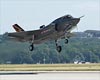 Fort Worth TX (SPX) Jan 02, 2009
Lockheed Martin rolled out the first weight-optimized conventional takeoff and landing (CTOL) variant of the F-35 Lightning II fighter on Dec. 19. The new F-35A, called AF-1, joins three weight-optimized F-35B short takeoff/vertical landing variants currently undergoing testing. The aircraft are structurally identical to the F-35s that will be delivered to armed services beginning in 2010. |
|
|

| The content herein, unless otherwise known to be public domain, are Copyright 1995-2007 - SpaceDaily.AFP and UPI Wire Stories are copyright Agence France-Presse and United Press International. ESA Portal Reports are copyright European Space Agency. All NASA sourced material is public domain. Additional copyrights may apply in whole or part to other bona fide parties. Advertising does not imply endorsement,agreement or approval of any opinions, statements or information provided by SpaceDaily on any Web page published or hosted by SpaceDaily. Privacy Statement |
 del.icio.us
 Digg
Digg Reddit
 YahooMyWeb
 Google
 Facebook