
 |
 |
 |
 |
 |
 |
 |
 |
 |

 |
Gamma-ray burst sets distance record
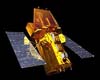
Washington, April 28, 2009 The U.S. space agency says its Swift satellite has found a gamma-ray burst from a star that died when the universe was only 630 million years old. The National Aeronautics and Space Administration said the event occurred when the universe was less than 5 percent of its present age and is the most distant cosmic explosion ever seen. "Swift was designed to catch these very distant bursts," said Swift lead scientist Neil Gehrels at NASA's Goddard Space Flight Center in Greenbelt, Md. "The incredible distance to this burst exceeded our greatest expectations -- it was a true blast from the past." The 10-second-long gamma-ray burst was detected at 3:55 a.m. EDT Thursday. Astronomers around the world quickly aimed their telescopes at the event. At the Galileo National Telescope on La Palma in the Canary islands, a team including Guido Chincarini of the University of Milan-Bicocca, Italy, determined the burst occurred more than 13 billion light-years away. "It's an incredible find," Chincarini said. "What makes it even better is that a telescope named for Galileo made this measurement during the year in which we celebrate the 400th anniversary of Galileo's first astronomical use of the telescope." Share This Article With Planet Earth
Related Links Stellar Chemistry, The Universe And All Within It
 New Gamma-Ray Burst Smashes Cosmic Distance Record
 London, UK (SPX) May 01, 2009
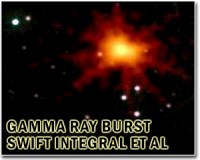
NASA's Swift satellite and an international team of astronomers have found a gamma-ray burst from a star that died when the universe was only 630 million years old, or less than five percent of its present age. The event, dubbed GRB 090423, is the most distant cosmic explosion ever seen. |
|
|

| The content herein, unless otherwise known to be public domain, are Copyright 1995-2007 - SpaceDaily.AFP and UPI Wire Stories are copyright Agence France-Presse and United Press International. ESA Portal Reports are copyright European Space Agency. All NASA sourced material is public domain. Additional copyrights may apply in whole or part to other bona fide parties. Advertising does not imply endorsement,agreement or approval of any opinions, statements or information provided by SpaceDaily on any Web page published or hosted by SpaceDaily. Privacy Statement |
 del.icio.us
 Digg
Digg Reddit
 YahooMyWeb
 Google
 Facebook