|
Germany to start storing carbon dioxide underground
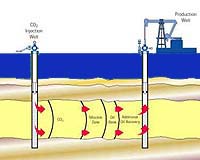
Berlin (AFP) June 30, 2008 Germany was due to inaugurate Europe's first underground carbon dioxide storage site on Monday, the country's national geoscience institute said. The site at Ketzin, outside Berlin, is part of a European project dubbed CO2SINK which aims to test whether capturing and storing carbon dioxide in subterranean rock is a viable way of fighting global warming, the GFZ centre in Potsdam said. It will pump up 60,000 tonnes of the greenhouse gas into porous, salt water-filled rock at depths of more than 600 metres (656 yards) over the next two years, the centre said. The first injection of gas below the surface was due to take place later on Monday. Reinhard Huettl, the science director of the institute, said storing carbon dioxide underground could slow down global warming and thereby buy scientists extra time to develop alternative energy sources. "The storage of the greenhouse gas carbon dioxide is an option to win time in the development and introduction of carbon dioxide-reduced energy technology," he said. Huettl said the site will become a "unique worldwide laboratory" to study the success of the world's main global warming gas. Some environmental groups have expressed reservations about capturing carbon emissions produced by industry to store it below ground, with Greenpeace saying it posed the risk of highly toxic leaks. Community Email This Article Comment On This Article Related Links
 Major Technological Progress Needed For 25 Percent Renewable Energy Use To Be Affordable
 Washington DC (SPX) Jun 30, 2008
Dramatic progress in renewable energy technology is needed if the United States desires to produce 25 percent of its electricity and motor vehicle fuel from renewable sources by 2025 without significantly increasing consumer costs, according to a RAND Corporation study. |
|
|
| The content herein, unless otherwise known to be public domain, are Copyright Space.TV Corporation. AFP and UPI Wire Stories are copyright Agence France-Presse and United Press International. ESA Portal Reports are copyright European Space Agency. All NASA sourced material is public domain. Additional copyrights may apply in whole or part to other bona fide parties. Advertising does not imply endorsement, agreement or approval of any opinions, statements or information provided by Space.TV Corp on any Web page published or hosted by Space.TV Corp. Privacy Statement |