|
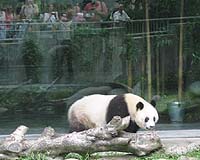
Giant Panda Could Survive As An Evolutionary Development
Cardiff UK (SPX) Aug 27, 2007 The giant panda is not at an "evolutionary dead end" and could have a long term viable future, according to new research involving scientists from Cardiff University. Previous studies have found that the giant panda's isolation, unusual dietary requirements and slow reproductive rates have led to a lack of genetic diversity that will inevitably lead the species to extinction. Now a study by Professor Michael Bruford and Dr Benoit Goossens from the School of Biosciences, in collaboration with Professor Fuwen Wei and colleagues from the Institute of Zoology along with the China West Normal University in Sichuan, has found that the decline of the species can be linked directly to human activities rather than a genetic inability to adapt and evolve. "Our research challenges the hypothesis that giant panda's are at an 'evolutionary dead end'" said Professor Bruford. "It is however clear that the species has suffered demographically at the hands of human activities such as deforestation and poaching". The study gives a new genetic perspective on the giant panda, as well as tracing its demographic history. The research also shows that in areas where habit conservation projects are in place, the giant panda is flourishing and population numbers are increasing. "Our research suggests we have to revise our thinking about the evolutionary prospects for the giant panda" said Professor Bruford. "The species has a viable future and possesses the genetic capacity to adapt to new circumstances. Conservation efforts should therefore be directed towards habitat restoration and protection. In their natural environment, the giant panda is a species that can have a bright future." Community Email This Article Comment On This Article Related Links Cardiff University Darwin Today At TerraDaily.com
 New Continent And Species Discovered In Atlantic Study
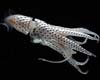 Aberdeen, UK (SPX) Aug 23, 2007
A scientist from the University of Aberdeen is leading a team of international researchers whose work will continue our understanding of life in the deepest oceans, and contribute to the global Census of Marine Life. Exploring life in the North Atlantic Ocean at various depths of 800 to 3,500 metres, a team of 31 scientists are returning from a five-week scientific expedition which has surfaced a wealth of new information and insights, stunning images and marine life specimens, with one species thought to be new to science. |
|
|
| The content herein, unless otherwise known to be public domain, are Copyright Space.TV Corporation. AFP and UPI Wire Stories are copyright Agence France-Presse and United Press International. ESA Portal Reports are copyright European Space Agency. All NASA sourced material is public domain. Additional copyrights may apply in whole or part to other bona fide parties. Advertising does not imply endorsement, agreement or approval of any opinions, statements or information provided by Space.TV Corp on any Web page published or hosted by Space.TV Corp. Privacy Statement |