
 |
 |
 |
 |
 |
 |
 |
 |
 |

 |
Global Warming Predicted To Hasten Carbon Release From Peat Bogs
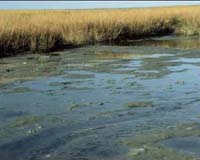
Cambridge MA (SPX) Nov 12, 2008 Billions of tons of carbon sequestered in the world's peat bogs could be released into the atmosphere in the coming decades as a result of global warming, according to a new analysis of the interplay between peat bogs, water tables, and climate change. Such an atmospheric release of even a small percentage of the carbon locked away in the world's peat bogs would dwarf emissions of manmade carbon, scientists at Harvard University, Worcester State College, and the Japan Agency for Marine-Earth Science and Technology write in the current issue of the journal Nature Geoscience. "Our modeling suggests that higher temperatures could cause water tables to drop substantially, causing more peat to dry and decompose," says Paul R. Moorcroft, professor of organismic and evolutionary biology in Harvard's Faculty of Arts and Sciences. "Over several centuries, some 40 percent of carbon could be lost from shallow peat bogs, while the losses could total as much as 86 percent in deep bogs." Typically found at northerly latitudes, peat bogs are swampy areas whose cold, wet environment preserves organic matter, preventing it from decaying. This new work shows how peat bogs' stability could be upset by the warming of the earth, which has disproportionately affected the higher latitudes where the bogs are generally found. Each square meter of a peat bog contains anywhere from a few to many hundreds of kilograms of undecomposed organic matter, for a total of 200 to 450 billion metric tons of carbon sequestered in peat bogs worldwide. This figure is equivalent to up to 65 years' worth of the world's current carbon emissions from fossil fuel burning. "Peat bogs contain vast stores of carbon," Moorcroft says. "They will likely respond to the expected warming in this century by losing large amounts of carbon during dry periods." Moorcroft and his colleagues simulated the responses of two peat bogs in northern Manitoba to temperature increases of 4 degrees Celsius, or 7.2 degrees Fahrenheit, a gain that is at the conservative end of estimates for the next 100 years. Their modeling looked specifically at water table dynamics, since peat bogs' stability is grounded in their cold, waterlogged nature. "Previous modeling has assumed that decomposition in peat bogs is like that in a conventional soil," Moorcroft says. "Ours is the first simulation to take a realistic look at the interaction between the dynamics of the water table, peat temperatures, and peat accumulation." Moorcroft plans to continue the research by expanding his group's analysis of peat bogs and water tables to global scales. Share This Article With Planet Earth
Related Links Harvard University Climate Science News - Modeling, Mitigation Adaptation
 Humidity increases greenhouse gas warming
 College Station, Texas (UPI) Nov 11, 2008
 U.S. scientists say if greenhouse gases levels are not reduced soon, significantly warmer global conditions are nearly a certainty during the next century. |
|
|

| The content herein, unless otherwise known to be public domain, are Copyright 1995-2007 - SpaceDaily.AFP and UPI Wire Stories are copyright Agence France-Presse and United Press International. ESA Portal Reports are copyright European Space Agency. All NASA sourced material is public domain. Additional copyrights may apply in whole or part to other bona fide parties. Advertising does not imply endorsement,agreement or approval of any opinions, statements or information provided by SpaceDaily on any Web page published or hosted by SpaceDaily. Privacy Statement |
 del.icio.us
 Digg
Digg Reddit
 YahooMyWeb
 Google
 Facebook