|
 |
 |
 |
 |
 |
 |
 |
 |

 |
Government Initiatives Drive Latin American Renewable Energy Markets
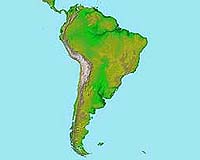
Buenos Aires, Argentina (SPX) Sep 20, 2007 In the wake of growing energy consumption and the most urgent need for sustainable energy resources, Latin American governments are beginning to accord high priority to the generation of energy from renewable energy sources (RES). Although some of them, such as solar and geothermal, are not entirely competitive in terms of costs and efficiency, others such as wind power and biomass have seen their installed base grow substantially across the region. New analysis from Frost and Sullivan, Latin America Renewable Energy Markets, reveals that this market reached around 4.400 MW in installed capacity in 2006, and estimates to achieve 17.300 MW installed capacity by 2013. If you are interested in a virtual brochure, which provides manufacturers, end users, and other industry participants with an overview of the latest analysis of Latin America Renewable Energy Markets, then send an e-mail to Jose Maria Jantus, Corporate Communications, at [email protected] with the following information: your full name, company name, title, telephone number, e-mail address, city, state, and country. We will send you the information via e-mail upon receipt of the above information. "Renewable energy sources are becoming an increasingly important component of Latin America's energy matrix, particularly with the growing need for enhanced energy security, rural electrification and energy diversification," notes Frost and Sullivan Energy Program Manager Milena Matone. "Government incentives and programs are evidently the main wind market drivers with Brazil's Program for Investments in Alternative Sources of Electric Energy (PROINFA) being a prime example." Among the various RES, wind power is one of the most promising in Latin America. While Brazil - 240 MW installed capacity - and Mexico - 88 MW installed capacity - are the prominent markets, Cost Rica holds strong growth potential due to high winds in the area. The country generates 75 MW (0.5 percent of its electricity) from wind power sources. "Likewise, biomass holds considerable promise for power generation as the Latin American region has a wide availability of wood wastes, agricultural, agroindustrial and livestock sub-products," says Jorge De Rosa, Frost and Sullivan Industry Analyst. "Isolated communities represent a great opportunity for biomass equipment suppliers since Latin American governments are keen in developing rural electrification programs." However, the principal constraints to wind power growth in Latin America are its cost and unrewarded environmental benefits: the choice for power sources is usually based in costs factors, without considering environmental externalities. In other words, environmental concerns should be fully taken into account and be reflected in more attractive and competitive prices for renewable energy sources - wind power included. "Furthermore, RES prices are, in most Latin American countries, not competitive vis-a-vis fossil fuels and traditional energy sources," explains Matone. "Institutional weakness and lack of continuity in energetic policies (except for Brazil) are the other major restraints holding back national as well as overseas investments in renewable energy projects." In order to overcome these challenges, participants should improve upon product technology and efficiency. Additionally, participants will do well to build strategic alliances and campaign for favorable government incentives and policies. "Overall, biomass power remains the dominant RES, and the Latin American biomass power installed capacity is expected to grow by 50 to 55 percent in 2007 as governments across the region begin implementing new biomass power projects," notes Milena Matone. "This is expected to burgeon by 80 percent in 2008." Latin America Renewable Energy Markets is part of the Energy and Power Systems Growth Partnership Services, which includes research in the following markets: UPS, turbines and carbon trading systems. All research included in subscriptions provide detailed market opportunities and industry trends that have been evaluated following extensive interviews with market participants. Interviews with the press are available. Community Email This Article Comment On This Article Related Links Powering The World in the 21st Century at Energy-Daily.com
 The 5 Ws Of Corn Production
 Madison WI (SPX) Sep 05, 2007
As of late, many uncertainties have been sprouting up in corn production. Researchers and producers have been wondering if precision agricultural technologies can improve crop yield and quality or reduce their variability. Farmers have been asking a number of questions from, which hybrid should I plant for best yield and quality, to does applying nitrogen fertilizer at a uniform rate produce a better crop outcome, and if not, what nitrogen fertilization strategy does produce a better crop in yield and quality" |
|
|
| The content herein, unless otherwise known to be public domain, are Copyright Space.TV Corporation. AFP and UPI Wire Stories are copyright Agence France-Presse and United Press International. ESA Portal Reports are copyright European Space Agency. All NASA sourced material is public domain. Additional copyrights may apply in whole or part to other bona fide parties. Advertising does not imply endorsement, agreement or approval of any opinions, statements or information provided by Space.TV Corp on any Web page published or hosted by Space.TV Corp. Privacy Statement |