
 |
 |
 |
 |
 |
 |
 |
 |
 |

 |
Hong Kong's economic growth spluttering on filthy air
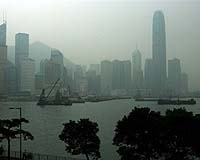
Hong Kong (AFP) Jan 20, 2009 When Teena Goulet moved to Hong Kong in 1995 she thought she would never leave but five years after moving here, the keen outdoorswoman developed a chronic cough. For someone who spent all her spare time outside -- hiking, dragon boating, rowing -- health was a major concern and after being diagnosed with adult onset asthma, Goulet, 45, decided last year to leave. "It is just so vibrant and so safe," the US banker said of Hong Kong. "There is an amazing quality to it. Doing business is so easy, the low tax is great, the food and restaurants are great. "I would have retired there," said Goulet, speaking by phone from her new home in California. "But when you cannot breath, it kind of tells you what to do." Within a week of moving to California last March, her cough stopped. In recent years, a thick haze originating from factories in southern China has enveloped Hong Kong for large chunks of the year, blocking views of its famous harbour and raising health fears. Combined with the city's home-grown pollution, scientists and business leaders say it presents a serious economic risk to the financial hub, both for its ability to attract and retain talent and the associated health costs. US investment guru Jim Rogers, who moved to Asia in 2007 with his family because of his conviction that China would be the major driver of the world economy, chose to live in Singapore. "I don't want to breathe Hong Kong air," he said. A report for the City of London last October about the potential challenges from Asian financial centres, said the "only consistently negative issue" cited by professionals about Hong Kong related to environmental pollution. The Hedley Environmental Index, a new website set up by a group of academics that combines air quality and public health data, puts the associated costs of the city's poor air at 12.5 billion Hong Kong dollars (1.6 billion US) since the start of 2004. It has, it said, caused 6,108 premature deaths. Anthony Hedley, the public health professor at Hong Kong University after whom the index is named, said the website's figures were conservative, as they excluded the long-term health effects of breathing toxic air. "We are building up an enormous debt of trouble, which will manifest itself in one, two, three decades and could rear a huge toll on our children," said Hedley. 'Hong Kong is choking on its own greed' -- A recent study commissioned by think tank Civic Exchange said one in five residents were considering leaving Hong Kong because of its dire air. Of the more than 1,000 people surveyed, 97 percent were local Chinese. Michael DeGolyer, a political science professor at Hong Kong Baptist University who did the study, said the mood was such that one "tipping point" could provoke an exodus, particularly among managers and administrators. "And Singapore wants them," said DeGolyer. The American Chamber of Commerce found in a recent member survey that 70 percent knew of professionals who had either left or were considering leaving because of the pollution. "Hong Kong needs to lead the way (to improve air quality). That is what being a world city stands for," said chamber chairman David Cunningham. While the filth from thousands of toy, clothing and electronics factories in neighbouring Guangdong province dominates headlines, Alexis Lau, an atmospheric sciences professor at the Hong Kong University of Science and Technology, said home-grown emissions from coal-fired power stations and dirty trucks were a more serious problem. "We still believe the local pollution is more important for health," Lau told a recent conference. Hedley, who is leaving Hong Kong after 21 years here partly over worries about the air -- he was diagnosed with adult onset asthma in his 60s -- said the government must wake up to the time bomb. "(The question for the government is) how many premature deaths are you prepared to accept?" said Hedley. Chief Executive Donald Tsang said in 2007 improving air quality was "a matter of life and death," and the government is currently reviewing its air quality guidelines, 20 years after they were last revised. A spokeswoman for the Environmental Protection Department said tough measures had already helped reduce levels of several roadside pollutants and it was working with Guangdong authorities to reduce the haze. New technology was being introduced to reduce emissions from power plants. The department said the number of overseas companies with regional headquarters, offices or local operations in Hong Kong had increased to 6,612 in 2008 from 5,414 in 2003. Any tougher regulations are likely to face opposition from sections of the local business community, which operates around 55,000 factories in Guangdong. Goulet, who is now planning a move to Japan, said such intransigence was short-sighted: "Hong Kong is choking on its own greed." Share This Article With Planet Earth
Related Links Our Polluted World and Cleaning It Up
 Report Calls Aerosol Research Key To Improving Climate Predictions
 Washington DC (SPX) Jan 20, 2009
Scientists need a more detailed understanding of how human-produced atmospheric particles, called aerosols, affect climate in order to produce better predictions of Earth's future climate, according to a NASA-led report issued by the U.S. Climate Change Science Program on Friday. |
|
|

| The content herein, unless otherwise known to be public domain, are Copyright 1995-2007 - SpaceDaily.AFP and UPI Wire Stories are copyright Agence France-Presse and United Press International. ESA Portal Reports are copyright European Space Agency. All NASA sourced material is public domain. Additional copyrights may apply in whole or part to other bona fide parties. Advertising does not imply endorsement,agreement or approval of any opinions, statements or information provided by SpaceDaily on any Web page published or hosted by SpaceDaily. Privacy Statement |
 del.icio.us
 Digg
Digg Reddit
 YahooMyWeb
 Google
 Facebook