
 |
 |
 |
 |
 |
 |
 |
 |
 |

 |
How Vision Sends Its Message To The Brain
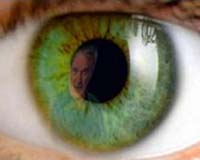
Washington DC (SPX) Feb 05, 2009 Scientists have known for more than 200 years that vision begins with a series of chemical reactions when light strikes the retina, but the specific chemical processes have largely been a mystery. A team of researchers from the United States and Switzerland, have she new light on this process by "capturing" this chemical communication for future study. This research, published in the February 2009 issue of The FASEB Journal, may lead to the development of new treatments for some forms of blindness and vision disorders. At the center of the discovery is the signaling of rhodopsin to transducin. Rhodopsin is a pigment in the eye that helps detect light. Transducin is a protein (sometimes called "GPCR") which ultimately signals the brain that light is present. The researchers were able to "freeze frame" the chemical communication between rhodopsin and transducin to study how this takes place and what goes wrong at the molecular level in certain disorders. According to Krzysztof Palczewski, a senior scientist involved in the research, "The results may have important implications for discovery and development of more specific medicines to treat GPCR-linked dysfunction and disease." Examples of health problems involving GPCR dysfunction include blindness, diabetes, allergies, depression, cardiovascular defects and some forms of cancer. To make their discovery, scientists isolated rhodopsin/transducin directly from bovine retinas. These membranes were suspended in solution and exposed to light to start the chemical signaling process. After light exposure, any contaminating proteins were removed, and the remaining rhodopsin and transducin "locked" in their chemical communication were removed using a centrifuge. In addition to helping scientists understand how vision begins, this research may also impact disorders affecting heart beat, blood pressure, memory, pain sensation, and infection response because it is believed that they are regulated by similar chemical communications involving similar proteins. "Until now, scientists have been in the dark when it comes to exactly how vision begins. This exciting new work shows how light becomes a chemical signal to the brain," said Gerald Weissmann, Editor-in-Chief of The FASEB Journal. "Now that we see the light, so to speak, entirely new types of custom-fit become possible for a wide range of diseases." Share This Article With Planet Earth
Related Links Federation of American Societies for Experimental Biology All About Human Beings and How We Got To Be Here
 Learning Science Facts Doesn't Boost Science Reasoning
 Columbus OH (SPX) Feb 05, 2009
A study of college freshmen in the United States and in China found that Chinese students know more science facts than their American counterparts - but both groups are nearly identical when it comes to their ability to do scientific reasoning. |
|
|

| The content herein, unless otherwise known to be public domain, are Copyright 1995-2007 - SpaceDaily.AFP and UPI Wire Stories are copyright Agence France-Presse and United Press International. ESA Portal Reports are copyright European Space Agency. All NASA sourced material is public domain. Additional copyrights may apply in whole or part to other bona fide parties. Advertising does not imply endorsement,agreement or approval of any opinions, statements or information provided by SpaceDaily on any Web page published or hosted by SpaceDaily. Privacy Statement |
 del.icio.us
 Digg
Digg Reddit
 YahooMyWeb
 Google
 Facebook