
 |
 |
 |
 |
 |
 |
 |
 |
 |

 |
International Team Cracks Mammalian Gene Control Code
Brisbane, Australia (SPX) Apr 27, 2009 An international consortium of scientists, including researchers from The University of Queensland (UQ), have probed further into the human genome than ever before. They have discovered how genes are controlled in mammals, as well as the tiniest genetic element ever found. Their discoveries will be published in three milestone papers in leading journal Nature Genetics. The research was coordinated by the RIKEN Yokohama Omics Science Center in Japan as part of the FANTOM4 consortium, with researchers from UQ's Institute for Molecular Bioscience playing major roles in two of the papers. PhD student Ryan Taft led one paper, on which Professor John Mattick was the senior author, while Associate Professor Sean Grimmond was a senior author on another paper led by Dr Geoff Faulkner. "FANTOM4 has shown that instead of having one or a few 'master regulator' genes that control growth and development, there is a sophisticated network of regulatory elements that subtly influence the ways in which genes are expressed in different cells in the body," Professor John Mattick said. This information will be very useful to medical and biological researchers, according to Associate Professor Sean Grimmond. "We can use it to discover how cells transform from rapidly-growing 'blank slate' cells to mature cells with a specific function. This knowledge will help us determine, for example, why some cells turn cancerous, or how to control stem cells for use in regenerative medicine." One of the papers describes the discovery of tiny RNAs, the smallest genetic elements yet known, which are linked to the expression of individual genes. Tiny RNAs are 18 nucleotides long, 100 times smaller than an average gene. "Researchers had previously noticed small lengths of RNA in the genome, but thought that they were degraded segments of larger genetic elements," Mr Taft said. "We found that they were too common and too specifically distributed to be rubbish. They are widely associated with promoters that switch on genes, and we believe they may have a role in gene activation. Once we understand their role more explicitly, we hope to use tiny RNAs to artificially control gene expression." RNA is a molecule similar to DNA that translates the genetic information in DNA into proteins, or as in the case of tiny RNAs, can regulate longer RNA molecules before they are translated to proteins. Another paper investigated retrotransposons, genetic elements that move around the genome and leave copies of themselves behind. "The dogma in the field is that retrotransposons are only active in cancer cells and cells that turn into eggs and sperm," Dr Faulkner said. "Our results showed that retrotransposons that can no longer move around the genome may still be expressed in a broad range of cells, and thereby regulate the expression of nearby genes." This is the fourth incarnation of the FANTOM consortium, which seeks to discover more about the workings of mammalian genomes through large-scale "systems biology" approaches. Professor Mattick said that it had been a "privilege to be part of this consortium". "It is another example of the wonderful and productive collaboration we have enjoyed with Japan over recent years," he said. Share This Article With Planet Earth
Related Links Research Australia Darwin Today At TerraDaily.com
 'G8-Plus' vow stronger commitments on protecting biodiversity
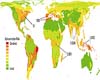 Syracuse, Italy (AFP) April 23, 2009
The environment ministers of rich and emerging nations Thursday pledged new commitments to stopping biodiversity loss even with resources hit hard by the global financial crisis. |
|
|

| The content herein, unless otherwise known to be public domain, are Copyright 1995-2007 - SpaceDaily.AFP and UPI Wire Stories are copyright Agence France-Presse and United Press International. ESA Portal Reports are copyright European Space Agency. All NASA sourced material is public domain. Additional copyrights may apply in whole or part to other bona fide parties. Advertising does not imply endorsement,agreement or approval of any opinions, statements or information provided by SpaceDaily on any Web page published or hosted by SpaceDaily. Privacy Statement |

 del.icio.us
 Digg
Digg Reddit
 YahooMyWeb
 Google
 Facebook