
 |
 |
 |
 |
 |
 |
 |
 |
 |

 |
Invasive species: toxic toad is vulnerable to Aussie ant
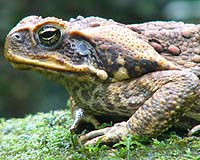
Paris (AFP) March 30, 2009 They've tried gassing it, freezing it, running over it in cars, whacking it with golf clubs and turning it into compost. But the cane toad, a horrid invasive species introduced to Australia nearly three-quarters of a century ago, has refused to croak. Now, though, a scientific paper published on Monday suggests Bufo marinus has a weak spot: it is vulnerable to a native Australian ant. The cane toad, indigenous to Central and Latin America, was brought to Australia in 1935 to help control beetles that threatened sugar-cane crops. The horny critter has now spread across most of tropical Australia, killing native carnivores, including crocodiles, snakes and lizards, that cannot tolerate its toxins, and devastating native frogs and toads through habitat loss. The Australian authorities have tried desperately to stop the invasion, including a "Toad Day Out" in the state of Queensland, which encourages people to hunt down the hated anuran. In a study published in the British journal Functional Ecology, a team led by Rick Shine, a professor at the University of Sydney, found the pest is vulnerable to the meat ant (Iridomyrmex purpureus) -- a fiercely aggressive, omnivorous species found all over Australia. In a special laboratory, the biologists compared use of habitat and behaviours between cane toads and seven native Australian frogs. Cane toads are active during the day -- when the meat ants themselves are busy -- and live in open micro-habitats. Aussie frogs, though, are nocturnal and tend to hole up safely in vegetation during the day, when meat ants are on the prowl. In addition, the scientists found, the Australian frogs are warier of the meat ants than the imported intruder and also quicker and nimbler at avoiding them compared to the cane toad, whose hops are shorter and slower due to their shorter shin bones. Ants' nests could thus be used as a defensive tool against toad expansion, goes the thinking. "The spread of cane toads through tropical Australia has created major ecological problems," Shine said. "The ideal way to control toad numbers would be to find a predator that kills and eats toads but leaves native frogs alone," he said in a press release issued by the British Ecological Society. "However, bringing in a predator from overseas might have catastrophic consequences, like those that occurred when cane toads were brought in." Shine says there is a nice twist here, because the advantages which the toad had when coming to Australia can be used against it. He calls it an "evolutionary trap" because the creature can be made to face challenges that it has not evolved to deal with. In 2007, biologists found the cane toad's range had expanded to 1.2 million square kilometers (463,000 square miles) in a swathe across Queensland and the Northern Territory, and predicted it could eventually spread around three-quarters of the country's coastline. Share This Article With Planet Earth
Related Links Darwin Today At TerraDaily.com
 Sharks pose Sydney food-chain puzzle
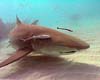 Sydney (AFP) March 29, 2009
As the first light of dawn filters over hills lined with multimillion-dollar mansions and classy seafood restaurants, the surface of the bay shatters into dancing shards of silver. |
|
|

| The content herein, unless otherwise known to be public domain, are Copyright 1995-2007 - SpaceDaily.AFP and UPI Wire Stories are copyright Agence France-Presse and United Press International. ESA Portal Reports are copyright European Space Agency. All NASA sourced material is public domain. Additional copyrights may apply in whole or part to other bona fide parties. Advertising does not imply endorsement,agreement or approval of any opinions, statements or information provided by SpaceDaily on any Web page published or hosted by SpaceDaily. Privacy Statement |
 del.icio.us
 Digg
Digg Reddit
 YahooMyWeb
 Google
 Facebook