
 |
 |
 |
 |
 |
 |
 |
 |
 |

 |

East Lansing MI (SPX) Dec 10, 2010 While Asian carp, gypsy moths and zebra mussels hog invasive-species Invisible Invasive Speciess, many invisible invaders are altering ecosystems and flourishing outside of the limelight. A study by Elena Litchman, Michigan State University associate professor of ecology, sheds light on why invasive microbial invaders shouldn't be overlooked or underestimated. "Invasive microbes have many of the same traits as their larger, 'macro' counterparts and have the potential to significantly impact terrestrial and aquatic ecosystems," said Litchman, whose research appears in the December issue of Ecology Letters. "Global change can exacerbate microbial invasions, so they will likely increase in the future." The public and scientists seem to be well-informed of the spread of Asian carp, zebra mussels and gypsy moths - all invasive macroorganisms. But what about exotic cyanobacteria, also called "blue-green algae," which have found their way into North American and European lakes? Or a nitrogen-fixing rhizobium, a soil microorganism that has emigrated from Australia to Portugal? In the Great Lakes, a brackish diatom (a microscopic alga), has colonized Lake Michigan probably via ballast-water discharge and is now the largest diatom in the waterways. How will it change the ecosystem? What changes has it caused already? While many people have a working knowledge of the American chestnut blight, which was caused by a pathogenic parasitic fungus, most invasive microbes fly beneath the radar of the public and scientists alike. Virtually nothing has been published on the potential of nonpathogenic microbes on a large scale, according to Litchman. "From scientific research, we know that the chestnut blight dramatically altered forests and how the spread of West Nile virus is associated with significant bird die-offs," she said. "Currently, there are no published examples of the impacts of invasive nonpathogenic microbes, but there is growing evidence that they could change ecosystems in equally dramatic fashion." The lack of attention to microbial invasions compared to macroorganisms is due, in part, to their cryptic nature and the difficulty of detection. Lack of detection combined with climate change could potentially increase these microbial invasions, which could continue to grow as the earth's weather patterns change, Litchman said. "Increasing air temperatures have been implicated in the spread of malaria and other pathogenic microbes into higher altitudes and latitudes," she said. "Likewise, climate change could stimulate invasions by tropical and subtropical nonpathogenic microbes into temperate latitudes."
Share This Article With Planet Earth
Related Links Michigan State University Darwin Today At TerraDaily.com

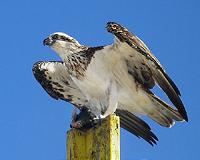 Soaring Is Better Than Flapping
Munich, Germany (SPX) Dec 10, 2010 Large birds, such as storks, save energy on the flight to their wintering grounds by soaring through the air on thermal currents. Until now, however, we knew nothing about the flight patterns of small migrating songbirds, such as whether they flap their wings or soar and whether these styles of flight allow them to save energy. Now, a team of scientists at the Max Planck Institute for Orni ... read more |
|
|
| The content herein, unless otherwise known to be public domain, are Copyright 1995-2010 - SpaceDaily. AFP and UPI Wire Stories are copyright Agence France-Presse and United Press International. ESA Portal Reports are copyright European Space Agency. All NASA sourced material is public domain. Additional copyrights may apply in whole or part to other bona fide parties. Advertising does not imply endorsement,agreement or approval of any opinions, statements or information provided by SpaceDaily on any Web page published or hosted by SpaceDaily. Privacy Statement |


 del.icio.us
 Digg
Digg Reddit
 YahooMyWeb
 Google
 Facebook


