
 |
 |
 |
 |
 |
 |
 |
 |
 |

 |
Iran Goes Into Space
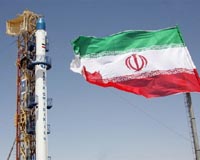
Moscow (RIA) Feb 04, 2009 On February 3, Iran fulfilled its promise to launch its first satellite, Omid (Hope), into orbit by its own carrier rocket before the end of the Iranian year (which ends in March). The world media reported that it has already transmitted a message from the Iranian leader to the effect that the successful launch "officially seals Iran's presence in space." The technical details of this start may be very interesting, but they are not decisive. What difference does it make if the satellite works in orbit for the declared several months, or merely makes a suborbital flight? The bottom line is that by deciding to become a fully-fledged space power, Iran will do so by any means. In any other case, the launch of a national satellite into space would not give rise to any apprehensions, let alone fear. In this case, however, Western experts associate what Iran has long declared as its "peaceful space program" exclusively with the development of nuclear missiles. Are these apprehensions well-grounded, especially considering that the launch was a success? In principle, the answer is affirmative. A number of successful launches of medium-range ballistic missiles and suborbital carriers suggest the scientific and technical ability to test strategic ballistic weapons in the near future. But that's about it. There is no reason to fear that a country that has made several successful space launches will be equipped with full-fledged nuclear missiles in the near future. These weapons require certain parameters, such as combat readiness and the ability to complete a very sophisticated flight. Moreover, an attempt to use even a single successfully tested nuclear missile is doomed to failure by current early warning systems and interceptors. High combat readiness of a nuclear missile force is determined by a prompt reaction to rapid situational changes and the ability to make the right decision. In the Soviet Union, preparations to launch the famous R-7 missile took 10 hours, but Soviet leaders kept repeating that it had the ability to strike U.S. territory. This was true only in theory, and in practice was highly unlikely. There are no grounds for thinking that Iran will be able to make its strategic weapons combat ready simultaneously with their development. For the time being, it does not even have such weapons. Moreover, launching a satellite is one thing, while delivering a warhead via intercontinental missile is another. At one time, the Soviet Union was pulling out all the stops in order to get the nuclear stick as soon as possible. However, Sergei Korolev and his team had to make countless tests before they managed to prevent the destruction of warheads in the dense layers of the atmosphere. The triumph of the fall of 1957, when the first satellite produced its "beep, beep" sound, was precipitated by a lack of ideas on how to deliver warheads to targets. The first sputnik was designed to distract a government that was bent on nuclear arms development. The effect exceeded all expectations, but that is a different story... The opinions expressed in this article are the author's and do not necessarily represent those of RIA Novosti.
Source: RIA Novosti Share This Article With Planet Earth
Related Links - Space Analysis and Space OpEds
 The Ongoing Erosion Of The US Space Industrial Base
 Bethesda MD (SPX) Jan 21, 2009
Once upon a time there was a big, beautiful country with an innovative, exciting Space Program. The government had great ideas and superb leadership. Space systems evolved and provided new services never before available to the people. Everyone was happy. |
|
|

| The content herein, unless otherwise known to be public domain, are Copyright 1995-2007 - SpaceDaily.AFP and UPI Wire Stories are copyright Agence France-Presse and United Press International. ESA Portal Reports are copyright European Space Agency. All NASA sourced material is public domain. Additional copyrights may apply in whole or part to other bona fide parties. Advertising does not imply endorsement,agreement or approval of any opinions, statements or information provided by SpaceDaily on any Web page published or hosted by SpaceDaily. Privacy Statement |
 del.icio.us
 Digg
Digg Reddit
 YahooMyWeb
 Google
 Facebook