|
Iran gives details on controversial space launch
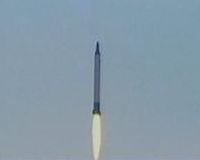
Tehran (AFP) Feb 19, 2008 Iran said on Tuesday a probe it sent into space on the back of rocket had reached an altitude of 200 kilometres (125 miles) and returned to earth after minutes, the student news agency ISNA reported. Kavoshgar (Explorer) was launched earlier this month on what Iran touted as its first rocket to be sent into space on a mission to prepare for the launch of its first home-produced satellite this summer. "Kavoshgar had two sections. The first section separated after 100 seconds and returned to earth with a parachute. The second continued to an altitude of 200 kilometres," said the head of Iran's space organisation, Ahmad Talebzadeh. "The second section of this rocket received data on the atmosphere and the electromagnetic waves on its path and simultaneously made contact with the base and returned to earth with a parachute after five to six minutes," he said. Iran has pursued a space programme for several years, and in October 2005 a Russian-made Iranian satellite named Sina-1 was put into orbit by a Russian rocket. The United States condemned the rocket launch as unfortunate and said it risked further isolating Iran from the international community at a time of growing tensions over Tehran's nuclear programme. Russian Foreign Minister Sergei Lavrov has also said Moscow "does not approve of Iran's permanent demonstration of its intentions to develop its rocket sector." But President Mahmoud Ahmadinejad lauded the launch as a national success and said Iran would launch two more rockets before the satellite is sent into space. Community Email This Article Comment On This Article Related Links Rocket Science News at Space-Travel.Com
 Jules Verne ATV Launch Approaching
 Paris, France (ESA) Feb 13, 2008
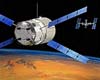
After the successful launch of ESA's Columbus laboratory aboard Space Shuttle Atlantis on Thursday (7 February), it is now time to focus on the next imminent milestone for ESA: the launch of Jules Verne, the first Automated Transfer Vehicle (ATV) to be sent to the International Space Station. |
|
|
| The content herein, unless otherwise known to be public domain, are Copyright Space.TV Corporation. AFP and UPI Wire Stories are copyright Agence France-Presse and United Press International. ESA Portal Reports are copyright European Space Agency. All NASA sourced material is public domain. Additional copyrights may apply in whole or part to other bona fide parties. Advertising does not imply endorsement, agreement or approval of any opinions, statements or information provided by Space.TV Corp on any Web page published or hosted by Space.TV Corp. Privacy Statement |