
 |
 |
 |
 |
 |
 |
 |
 |
 |

 |
Iran vows to make new rockets, nuclear fuel
Tehran (AFP) April 14, 2009 Iranian President Mahmoud Ahmadinejad said on Tuesday Tehran is building new rockets that can carry heavier satellites than the one launched in February. The hardline president also vowed that Iran will proceed with manufacturing nuclear fuel, even as Washington is reportedly planning to ease its demands over the atomic standoff with the Islamic republic. "They (world powers) think this (Safir-2) was our final rocket, but we are working on rockets which can go up to 700 kilometres (440 miles) and above and carry heavier satellites," Ahmadinejad said in an address to visiting expatriate Iranians. The Safir-2, which has a range of 250 kilometres, was sent into space in February carrying Iran's first home-built satellite Omid (Hope) which reportedly weighs around 60 pounds (27 kilogrammes). Ahmadinejad did not indicate how much heavier the new satellites would be. The launch of Omid had raised concerns among world powers who remain at loggerheads with Tehran's controversial nuclear programme. Ahmadinejad also vowed on Tuesday to proceed with plans to produce nuclear fuel despite the international concerns. "According to the programme, we are going ahead with the production of (nuclear) fuel," he said. Last week, Ahmadinejad inaugurated Iran's first nuclear fuel plant in the central province of Isfahan, indicating that the country had mastered the complete nuclear fuel cycle. He also reiterated that Tehran now had 7,000 centrifuges working at its uranium enrichment facility in Natanz, also located in Isfahan. But in its February 19 report, the UN nuclear watchdog, the International Atomic Energy Agency said 3,964 centrifuges were actively enriching uranium in Natanz. It said another 1,476 were undergoing vacuum or dry run tests without nuclear material, and an additional 125 centrifuges had been installed but remained stationary. Enriching uranium lies at the heart of the controversy surrounding Iran's nuclear programme as enriched uranium is used to fuel nuclear power stations but can also be used to make the core of an atomic bomb. His comments came amid reports the United States could scrap its demand that Iran stop enriching uranium in the early stages of expected talks on Tehran's nuclear programme between world powers and the Islamic republic. "Those who put conditions on us are now accepting the greatness of the Iranian nation," Ahmadinejad said. "Now they are saying ... welcome and let us solve the world issues together." He said he hoped the powers led by Washington were "sincere in their talk and have truly understood the real status of the Iranian nation. All this happened due to the solidarity and courage of the Iranian people." The New York Times reported on Tuesday that US and European diplomats have considered allowing Iran to continue enriching uranium for a time while talks on the country's nuclear drive get off the ground, a sharp shift in policy. The administration of former president George W. Bush had insisted that Iran mothball its enrichment programme before talks begin, amid fears that the activities may be part of a nuclear weapons programme. Tehran has long rejected that proposal, arguing it had a legitimate right to run a civil nuclear programme -- including the enrichment of uranium -- under international law. "We have all agreed that is simply not going to work -- experience tells us the Iranians are not going to buy it," the New York Times quoted a European diplomat as saying. If approved the shift in tactics is likely to provoke an outcry in Israel, which claims Iran is trying to prevaricate while it continues to build a nuclear weapon. The so-called P5-plus-1 -- the permanent five members of the UN Security Council, plus Germany -- have long offered Iran trade, financial and other incentives in return for halting its uranium enrichment programme. But so far Tehran has refused, leaving diplomatic efforts deadlocked. Share This Article With Planet Earth
Related Links Military Space News at SpaceWar.com
 NKorea missile seen in commercial image: US institute
 Washington (AFP) April 7, 2009
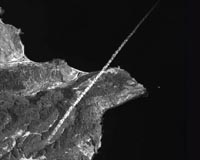
North Korea's controversial rocket launch was caught by commercial satellite imagery, according to pictures released by a non-profit US research institute. |
|
|

| The content herein, unless otherwise known to be public domain, are Copyright 1995-2007 - SpaceDaily.AFP and UPI Wire Stories are copyright Agence France-Presse and United Press International. ESA Portal Reports are copyright European Space Agency. All NASA sourced material is public domain. Additional copyrights may apply in whole or part to other bona fide parties. Advertising does not imply endorsement,agreement or approval of any opinions, statements or information provided by SpaceDaily on any Web page published or hosted by SpaceDaily. Privacy Statement |

 del.icio.us
 Digg
Digg Reddit
 YahooMyWeb
 Google
 Facebook