
 |
 |
 |
 |
 |
 |
 |
 |
 |

 |
JPL Analyzing Spirit Computer Reboots And Amnesia Events
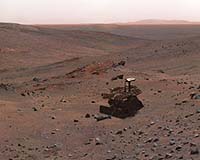
Pasadena CA (JPL) Apr 21, 2009 After three days of completing Earth-commanded activities without incident last week, NASA's Mars Exploration Rover Spirit had a bout of temporary amnesia Friday, April 17, and rebooted its computer Saturday, April 18, behavior similar to events about a week earlier. Engineers operating Spirit are investigating the reboots and the possibly unrelated amnesia events, in which Spirit unexpectedly fails to record data into the type of memory, called flash, where information is preserved even when power is off. Spirit has had three of these amnesia events in the past 10 days, plus one on Jan. 25. No causal link has been determined between the amnesia events and the reboots. The most recent reboot put Spirit back into an autonomous operations mode in which the rover keeps itself healthy. Spirit experienced no problems in this autonomous mode on Sunday. The rover team at NASA's Jet Propulsion Laboratory, Pasadena, Calif., revised plans today for regaining Earth control of Spirit's operations and resuming diagnostic and recovery activities by the rover. "We are proceeding cautiously, but we are encouraged by knowing that Spirit is stable in terms of power and thermal conditions and has been responding to all communication sessions for more than a week now," said JPL's Sharon Laubach, chief of the rover sequencing team, which develops and checks each day's set of commands. During the past week of diagnostic activities, the rover has successfully moved its high- gain dish antenna and its camera mast, part of checking whether any mechanical issues with those components may be related to the reboots, the amnesia events, or the failure to wake up for three consecutive communication sessions two weeks ago. Spirit and its twin rover, Opportunity, completed their original three-month prime missions on Mars in April 2004 and have continued their scientific investigations on opposite sides of the planet through multiple mission extensions. Engineers have found ways to cope with various symptoms of aging on both rovers. The current diagnostic efforts with Spirit are aimed at either recovering undiminished use of the rover or, if some capabilities have been diminished, to determine the best way to keep using the rover. Laubach said, "For example, if we do determine that we can no longer use the flash memory reliably, we could design operations around using the random-access memory." Spirit has 128 megabytes of random-access memory, or RAM, which can store data as long as the rover is kept awake before its next downlink communications session. Share This Article With Planet Earth
Related Links Mars Rovers at JPL Mars Rovers at Cornell Mars News and Information at MarsDaily.com Lunar Dreams and more
 Opportunity For Some Crater Hopping On Route To Endeavour
 Pasadena CA (JPL) Apr 20, 2009
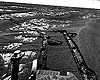
Opportunity has been crater hopping as the rover heads south, making drives between several small craters and taking drive-by images of them. |
|
|

| The content herein, unless otherwise known to be public domain, are Copyright 1995-2007 - SpaceDaily.AFP and UPI Wire Stories are copyright Agence France-Presse and United Press International. ESA Portal Reports are copyright European Space Agency. All NASA sourced material is public domain. Additional copyrights may apply in whole or part to other bona fide parties. Advertising does not imply endorsement,agreement or approval of any opinions, statements or information provided by SpaceDaily on any Web page published or hosted by SpaceDaily. Privacy Statement |
 del.icio.us
 Digg
Digg Reddit
 YahooMyWeb
 Google
 Facebook