
 |
 |
 |
 |
 |
 |
 |
 |
 |

 |
Japan researchers unveil robot suit for farmers
Tokyo (AFP) Jan 9, 2009 Japanese researchers on Friday unveiled a robot suit designed to help reduce the heavy burden of harvesting as the nation's farm industry faces an ageing, shrinking workforce. Researchers at Tokyo University of Agriculture and Technology demonstrated a prototype wearable assistance machine equipped with eight motors and 16 sensors. The 25-kilogramme (55-pound) device is designed to assist elderly farmers who need support for their leg muscles and joints when they keep a crouching position or lift their arms high. In a demonstration, a person wearing the suit pulled radishes from the ground and picked oranges from high branches like a robot. The researchers said they were looking to commercial use of the suit in two to three years at an initial price ranging from 500,000 yen to one million yen (about 5,000 to 10,000 dollars). "Human robotic technology is being applied to various industries but it has great potential in the agricultural industry, in which people have to bear a heavy burden," said professor Shigeki Toyama. "That's especially obvious in Japan, where the industry is rapidly ageing and its population is shrinking," he said. He expected robotics would increasingly be put to use in farming in Japan and smaller European countries, where there is not enough space for large-scale agriculture and manual labour is costly. Japan has been developing robots to serve in a growing number of jobs including office receptionists and security guards. Share This Article With Planet Earth
Related Links All about the robots on Earth and beyond!
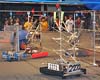
 Marshall Sponsors Four Student Teams In FIRST Robotics Competitions
 Huntsville AL (SPX) Dec 12, 2008
How can you tell when spring is in the air? The robots start showing up everywhere. And NASA's Marshall Space Flight Center in Huntsville, Ala., is happy to help make that happen. |
|
|

| The content herein, unless otherwise known to be public domain, are Copyright 1995-2007 - SpaceDaily.AFP and UPI Wire Stories are copyright Agence France-Presse and United Press International. ESA Portal Reports are copyright European Space Agency. All NASA sourced material is public domain. Additional copyrights may apply in whole or part to other bona fide parties. Advertising does not imply endorsement,agreement or approval of any opinions, statements or information provided by SpaceDaily on any Web page published or hosted by SpaceDaily. Privacy Statement |

 del.icio.us
 Digg
Digg Reddit
 YahooMyWeb
 Google
 Facebook