
 |
 |
 |
 |
 |
 |
 |
 |
 |

 |

Kitakami, Japan (AFP) March 20, 2011 Crews fighting to cool reactors at Japan's stricken nuclear plant struggled Sunday to switch partial power back on after a natural disaster that has left nearly 20,000 people dead or missing. The discovery of radiation in foodstuffs in regions around the plant, and of traces of radioactive iodine in Tokyo tap water well to the southwest, compounded public anxiety but authorities said there was no danger to health. The Fukushima No. 1 plant was crippled on March 11 by a massive earthquake and tsunami which, with at least 7,653 people confirmed killed, is Japan's worst natural disaster since 1923. Another 11,746 are missing, feared lost to the tsunami or buried in the wreckage of buildings. For half a million survivors, many huddled in poorly supplied and spartan shelters, conditions in the icy north are miserable. According to the charity Save the Children, around 100,000 children were displaced by the disaster and signs of trauma are evident among survivors as the nuclear emergency and countless aftershocks heighten their terror. "We found children in desperate conditions, huddling around kerosene lamps and wrapped in blankets," Save the Children spokesman Ian Woolverton said after visiting a number of evacuation centres in Japan's tsunami-hit northeast. "They told me about their anxieties, especially their fears about radiation," Woolverton said, adding that several youngsters had mentioned the US atom bomb attacks on Hiroshima and Nagasaki, which they know from school. Cooling systems that are meant to protect the Fukushima plant's six reactors from a potentially disastrous meltdown were knocked out by the tsunami, and engineers have been battling ever since to put a lid on rising temperatures. The radiation-suited crews were battling to partially restore electricity to the ageing facility 250 kilometres (155 miles) northeast of Tokyo, after extending a high-voltage cable into the site from the national grid. But plant operator TEPCO said it would be difficult by the end of Sunday to restart power to the cooling systems on two reactors that were badly damaged when a series of explosions tore away their outer buildings. Spraying of water from high-pressure hoses -- an operation meant to cool the reactors from afar -- was complicating the reconnection of electricity, it said, according to Jiji Press. However, a spokesman for Japan's Nuclear and Industrial Safety Agency said that workers were still striving to restore power on Sunday if possible. Japanese and UN atomic officials cautioned there was no guarantee that cooling pumps would operate even with power back up, given the extent of damage from the towering tsunami, and TEPCO planned a series of tests first. Fire engines again aimed their water jets at the reactors and fuel rod pools, where overheating is an equal concern, dumping in thousands of tonnes of seawater from the adjoining Pacific. They focused much of their effort on a reactor pool storing plutonium-uranium mixed oxide (MOX) fuel, which is more volatile than normal uranium fuel rods. Six workers at the Fukushima plant have been exposed to high levels of radiation but are continuing to work and have suffered no health problems, TEPCO said. Japan's government has been insisting that there is no widespread threat of radiation but confirmed Saturday that tainted milk had been found in Fukushima prefecture, and contaminated spinach in neighbouring Ibaraki. Abnormal levels of radioactive iodine were also found in the water supply in areas including Tokyo and Fukushima, officials said. But as with the milk and spinach, they stressed the levels were still far too lower to endanger health. A plume heading eastwards from Fukushima has now reached the western Atlantic but its radioactivity is likely to be "extremely low" and have no impact on health or the environment, France's nuclear safety watchdog said. In the disaster epicentre of northeast Japan, authorities have been battling to get more fuel and food to areas where the 10-metre (33-foot) tsunami reduced entire towns to splintered matchwood. At shelters, some grandparents are telling children stories of how they overcame hardships in their own childhood during and after World War II, which left Japan in ruins. "We have to live at whatever cost," said Shigenori Kikuta, 72. "We have to tell our young people to remember this and pass on our story to future generations, for when they become parents themselves," he said. burs-jit/je
Share This Article With Planet Earth
Related Links Bringing Order To A World Of Disasters A world of storm and tempest When the Earth Quakes

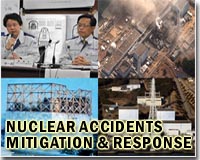 Japan vies to restore power to wrecked atom plant
Kitakami, Japan (AFP) March 20, 2011 Crews fighting to cool reactors at Japan's stricken nuclear plant hoped Sunday to switch partial power back on after a natural disaster that has left nearly 20,000 people dead or missing. The discovery of radiation in foodstuffs in regions around the plant, and of traces of radioactive iodine in Tokyo tap water well to the southwest, compounded public anxiety but authorities said there was n ... read more |
|
|
| The content herein, unless otherwise known to be public domain, are Copyright 1995-2010 - SpaceDaily. AFP and UPI Wire Stories are copyright Agence France-Presse and United Press International. ESA Portal Reports are copyright European Space Agency. All NASA sourced material is public domain. Additional copyrights may apply in whole or part to other bona fide parties. Advertising does not imply endorsement,agreement or approval of any opinions, statements or information provided by SpaceDaily on any Web page published or hosted by SpaceDaily. Privacy Statement |


 del.icio.us
 Digg
Digg Reddit
 YahooMyWeb
 Google
 Facebook


