
 |
 |
 |
 |
 |
 |
 |
 |
 |

 |
Japanese cure spinal damage in mice
Tokyo (UPI) Feb 4, 2009 Japanese scientists said Wednesday they cured mice whose hind legs were paralyzed by damage to their spinal cords, offering hope to people with paralysis. Researchers at Keio University in Tokyo announced at a symposium that they had achieved the first confirmed case in which movement in paralyzed mice's limbs was restored by transplanting neural stem cells grown from human iPS cells, or induced pluripotent stem cells, Kyodo news service reported Wednesday. ''It is valuable that treatment using human iPS cells has proved effective, said physiology Professor Hideyuki Okano, who led the research team. "We want to apply (the results) in a clinical setting as soon as possible.'' To this point, there is no effective treatment for people who suffer paralysis when their spinal cords sustain nerve damage in traffic or sports accidents. The Japanese researchers generated neural stem cells, which will grow into nerve cells, from human iPS cells produced under a method developed by Shinya Yamanaka of Kyoto University. They then transplanted about a half million of the cells into the damaged spines of 40 mice, Okano said. All 29 mice that survived were able to walk or run again about a month later. The other 11 mice died of diseases not related to the experiment. The research team will dissect the mice later to check whether the nerve tissues were regenerated in the damaged organs. Share This Article With Planet Earth
Related Links The Clone Age - Cloning, Stem Cells, Space Medicine
 'Scrawny' gene keeps stem cells healthy
 Baltimore (UPI) Jan 7, 2009
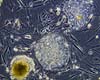
The discovery of a "scrawny" gene in fruit flies may improve researchers' ability to direct stem cell differentiation in desired ways, U.S. researchers say. |
|
|

| The content herein, unless otherwise known to be public domain, are Copyright 1995-2007 - SpaceDaily.AFP and UPI Wire Stories are copyright Agence France-Presse and United Press International. ESA Portal Reports are copyright European Space Agency. All NASA sourced material is public domain. Additional copyrights may apply in whole or part to other bona fide parties. Advertising does not imply endorsement,agreement or approval of any opinions, statements or information provided by SpaceDaily on any Web page published or hosted by SpaceDaily. Privacy Statement |
 del.icio.us
 Digg
Digg Reddit
 YahooMyWeb
 Google
 Facebook