|
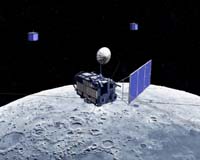
Japanese lunar probe finishes critical phase
Tokyo (AFP) Oct 9, 2007 Japan's first lunar probe, launched more than a month ago, successfully finished its initial critical phase, the space agency said Sunday. "Both the Kaguya main satellite and its two baby satellites are in good health," the Japan Aerospace Exploration Agency (JAXA) said in a statement. The Kaguya probe, named after a fairytale princess, released two baby satellites after being launched from southern Japan on September 14. The 55-billion-yen (478-million-dollar) lunar probe is on the most extensive mission to investigate the moon since the US Apollo programme in the 1960s and 1970s, according to the space agency. The baby satellites will be used to study the gravity fields of the moon, among other projects, the space agency said. Japan has been expanding its space operations and has set a goal of sending an astronaut to the moon by 2020. Community Email This Article Comment On This Article Related Links Mars News and Information at MarsDaily.com Lunar Dreams and more
 USC Concept Synthesis Studio Colonizes The Moon With Bugs
 Los Angeles CA (SPX) Oct 19, 2007
A lucky nine graduate students, ranging from industry participants to foreign nationals, spent the evening presenting their concepts and projects for some of the parts needed to land objects and colonize with man the moon above. I say lucky in that the audience contained some great space minds who were wry with commentary. The Space Concepts Studio: Space Exploration Architectures event was time well spent by all participants and I think left many thinking of tangential ideas to dream big with enthusiasm for space architecture. |
|
|
| The content herein, unless otherwise known to be public domain, are Copyright Space.TV Corporation. AFP and UPI Wire Stories are copyright Agence France-Presse and United Press International. ESA Portal Reports are copyright European Space Agency. All NASA sourced material is public domain. Additional copyrights may apply in whole or part to other bona fide parties. Advertising does not imply endorsement, agreement or approval of any opinions, statements or information provided by Space.TV Corp on any Web page published or hosted by Space.TV Corp. Privacy Statement |